
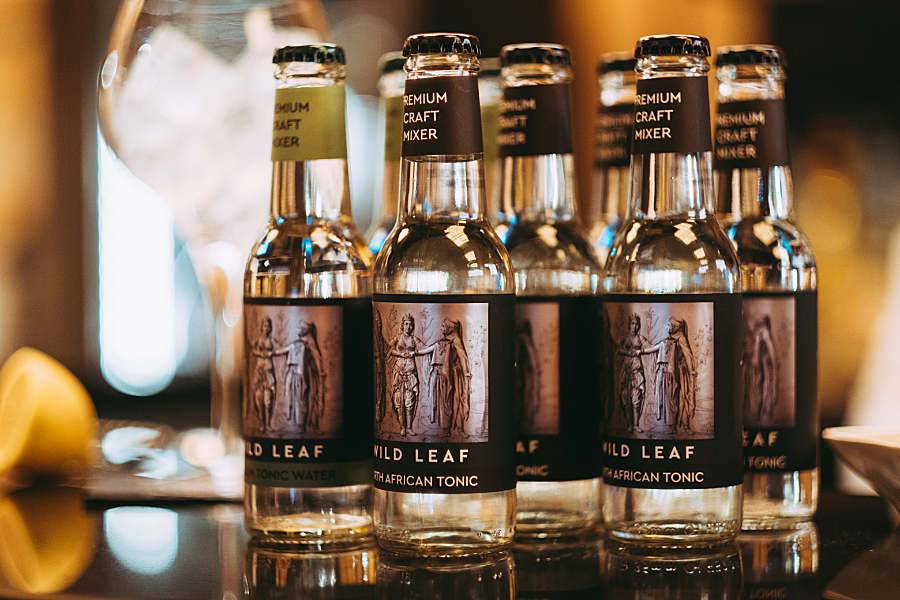
The premium mixer category in the UK has never been more competitive. Fever-Tree rewrote the rules. Consumers followed. And in doing so, they created a market hungry for the next genuinely exciting brand to emerge. Wild Leaf is exactly that brand. A premium craft mixer built around natural botanicals, real ingredients, and a brand identity as distinctive as its flavor profile Wild Leaf is one of the projects at Branding Innovations that demonstrates what happens when authentic product innovation meets disciplined brand development.
This is the full case study of how Branding Innovations developed and launched Wild Leaf into the UK premium mixer market from the first market insight to the final launch strategy.
The Market Opportunity: Why Wild Leaf Had a Right to Win
Every brand development project at Branding Innovations begins with the same question: does a genuine market opportunity exist for this product? Before we create a single mood board or make a flavor sample, we need evidence that the gap is real and the timing is right. For Wild Leaf, the evidence was compelling.
The UK premium mixer market had exploded in the decade following Fever-Tree’s rise. Consumers who had upgraded their spirits were demanding mixers that matched their quality expectations. Tonic water, ginger beer, soda water the category had been transformed from a commodity afterthought into a considered purchase.
But within that growth, a specific gap had opened. The leading premium mixer brands had become the new mainstream. Their success had made them ubiquitous stocked everywhere, seen everywhere, chosen by default. The craft mixer space genuinely small-batch, genuinely botanical, genuinely distinctive remained underserved at scale.
Wild Leaf was built to fill that space precisely.
According to McKinsey’s State of Food and Beverage research, disruptor brands are intensifying competition across every F&B category. But disruption requires genuine differentiation not just a different label on a familiar product. Wild Leaf disrupted the premium mixer category by going further than any competitor on botanical authenticity, flavor complexity, and brand identity.
The UK premium mixer and adult soft drink market told us several critical things during research:
| Market Insight | Relevance to Wild Leaf |
| Premium mixer market growing strongly post-Fever-Tree boom | Established and growing consumer appetite |
| Leading brands becoming commoditised through overexposure | Gap for genuinely craft, independent positioning |
| Consumer demand for natural, botanical ingredients accelerating | Wild Leaf’s core product credential perfectly timed |
| Cocktail culture growing at home and in hospitality | Expanded consumption occasions beyond pub and bar |
| Independent spirits market booming — gin, rum, whisky | Natural pairing opportunity with premium spirit brands |
| On-trade buyers actively seeking new mixer alternatives | Buyer appetite aligned with product launch timing |
This combination of factors gave Wild Leaf structural commercial advantages from the very beginning. The market was ready. The gap was open. The consumer was waiting.
Defining the Wild Leaf Consumer
Before brand development begins, the consumer must be defined with precision. Vague consumer profiles produce vague brands. Wild Leaf required a consumer definition sharp enough to guide every creative and commercial decision that followed.
The Wild Leaf consumer:
- Age 28–50, discerning, drinks-literate, and actively interested in premium spirits and cocktail culture
- Hosts at home and seeks impressive, conversation-starting products for guests
- Shops in premium supermarkets, independent off-licences, and online spirits retailers
- Follows food and drink trends aware of botanical ingredients, sustainability, and provenance
- Willing to pay a meaningful premium for genuinely better quality and a brand with personality
- Values craft and authenticity suspicious of mass-market products dressed up as artisan
- Influenced by bartenders, food writers, lifestyle media, and peer recommendation
This consumer profile made several things immediately clear. Wild Leaf could not be a mass-market brand pretending to be craft. It had to be the real thing genuine botanical credentials, genuine quality credentials, and a genuine brand story or its target consumer would see through it instantly.
That demand for authenticity shaped every subsequent decision in the Wild Leaf brand development process.
Brand Positioning: Where Wild Leaf Lives in the Market
With the consumer defined and the market gap identified, we established Wild Leaf’s brand positioning. This is the single most important strategic decision in the brand development process and the one that all subsequent creative and commercial decisions must serve.
Wild Leaf’s positioning:
“The UK’s most botanically authentic craft mixer brewed from real leaves, flowers, and roots for spirits drinkers who refuse to compromise on what goes in their glass.”
This positioning achieved several things simultaneously:
- It staked a clear claim to botanical authenticity — the strongest differentiator in the category
- It spoke directly to spirits drinkers — a defined, premium, commercially valuable audience
- It used the language of refusal and standards — matching the mindset of the target consumer
- It was ownable — no mainstream mixer brand could credibly claim this territory
- It was expandable — a platform flexible enough to support future variant development and category extension
Positioning this clear and this specific is rare in the mixer category. Most brands in this space communicate on occasion “perfect with gin,” “serve over ice” rather than on identity. Wild Leaf communicated on identity from day one. That distinction separates brands that build loyal audiences from brands that attract occasional buyers.
The Wild Leaf Name: Why It Works
Brand naming is one of the most underestimated decisions a drink brand makes. The name must work commercially, creatively, legally, and emotionally all at once. Wild Leaf earned its place on every one of those dimensions.
Why Wild Leaf is an exceptional brand name:
- “Wild” communicates authenticity, nature, independence, and craft everything the brand stands for
- “Leaf” grounds the brand directly in botanical ingredients the product’s core differentiator
- Together they create immediate sensory imagery a lush, natural, grown world of genuine ingredients
- The name is short, memorable, and easy to pronounce across languages
- It is ownable and trademarkable a genuine long-term brand asset
- It works across product formats and future extension Wild Leaf Tonic, Wild Leaf Ginger, Wild Leaf Elderflower all carry naturally
A name this well-suited to its brand does significant communication work before a single word of copy is written. At Branding Innovations, we treat naming as a strategic discipline not a creative exercise. Wild Leaf demonstrates what that discipline produces when it is applied well.
Recipe Development: The Botanical Foundation
Wild Leaf’s brand promise genuine botanical authenticity had to be delivered at product level without compromise. A brand that promises real ingredients and delivers artificial flavoring destroys trust the moment a discerning consumer tastes it. For Wild Leaf, recipe development was as strategically important as brand development.
Through our recipe development service, we built Wild Leaf’s flavor profiles around real botanical ingredients leaves, flowers, roots, and peels that delivered genuine complexity and depth.
Wild Leaf’s core botanical ingredient approach:
| Botanical Category | Example Ingredients | Flavor Contribution |
| Leaves | Mint, lemon verbena, green tea | Freshness, aromatic lift, clean finish |
| Flowers | Elderflower, hibiscus, chamomile | Floral complexity, delicate sweetness |
| Roots | Ginger, gentian, liquorice root | Warmth, bitterness, depth |
| Citrus Peels | Lemon, lime, grapefruit | Brightness, zest, aromatic sharpness |
| Spices | Cardamom, black pepper, juniper | Complexity, warmth, spirit pairing |
| Botanicals | Quinine bark, angelica root | Classic tonic bitterness, structure |
The team developed each flavor variant in the Wild Leaf range to pair with specific spirit categories, giving every product a clear serving occasion and a clear consumer recommendation at the point of sale.
Our recipe development team worked iteratively creating samples, tasting against spirits partners, refining until every variant delivered the complexity and quality that Wild Leaf’s premium positioning demanded. All ingredients were verified against UK and EU food safety regulations, and all botanical claims were checked for compliance with UK Food Standards Agency guidelines before any production commitment was made.
Visual Identity: Building a Brand That Earns Its Shelf Position
Wild Leaf needed a visual identity that could genuinely communicate craft authenticity and premium quality in a category where many undeserving brands had already borrowed both concepts.
Our design approach for Wild Leaf was guided by four principles:
1. Nature as the Visual Language
Every element of Wild Leaf’s visual identity draws from the natural world. Botanical illustration, natural color palettes drawn from leaves, flowers, and roots, and tactile packaging finishes that reward close inspection. The brand should feel like it was grown not manufactured.
2. Restraint Over Decoration
Premium craft brands earn their tier through restraint. Wild Leaf’s packaging avoids visual clutter. Every element earns its place. White space communicates confidence. The botanical illustration work is detailed and beautiful but it breathes. The brand never shouts. It invites.
3. Colour as Variant Identity
Each Wild Leaf variant carries its own distinct color identity drawn directly from the hero botanical of that variant. This creates immediate shelf standout across the range while maintaining complete brand cohesion. A consumer familiar with one Wild Leaf variant immediately recognizes a new one and understands what it offers before reading a word.
4. Typography That Reflects Character
Wild Leaf’s typographic treatment balances heritage craft with modern premium. The brand name itself is set with confidence neither delicate nor aggressive. It is the typography of a brand that knows exactly what it is.
The result was a brand identity that earned its premium shelf position visually before any tasting note was read. In the premium mixer category, where the bar for design quality is exceptionally high, Wild Leaf stood independently and stood apart.
Packaging Communication: What the Label Must Do
Wild Leaf’s packaging was required to communicate multiple messages simultaneously to two distinct audiences:
To the on-trade buyer (bar manager, restaurant buyer):
- This is a genuinely premium product that elevates the serves your customers order
- The botanical credentials are real this is not flavoring, it is genuine ingredient quality
- The brand identity is strong enough to be displayed on bar and mentioned on cocktail menus
- The range logic is clear easy to range and recommend to customers
To the end consumer (spirits drinker at home or in a bar):
- This mixer is worth choosing over what you usually buy
- The botanicals are real and the flavor is genuinely different
- This is a brand with a story picking Wild Leaf says something about your taste
- The serve suggestion is clear you know exactly what to pair it with
Strong packaging communicates to both audiences without contradiction. Wild Leaf’s front-of-pack hierarchy name, variant, botanical hero, serve suggestion achieved exactly this. At Branding Innovations, we design packaging to work in every context the product will be seen on shelf, in a bar fridge, in an online thumbnail, and in a social media post.
According to research on brand innovation strategy, brands must create unified visual systems across all product lines. Wild Leaf’s range architecture consistent in identity, distinct in variant is exactly this kind of unified system in practice.
Production: Delivering the Botanical Promise at Scale
Wild Leaf’s botanical authenticity had to survive the transition from development kitchen to commercial production without compromise. This is one of the most critical and most frequently underestimated challenges in premium drink brand development.
Through our production management service, we managed:
- Co-packer selection with cold-process botanical brewing capability
- Ingredient sourcing for botanical raw materials at commercial scale
- Quality specifications for botanical extract concentration and consistency
- Packaging production across the full variant range glass bottles, labels, closures
- Shelf-life testing under multiple storage conditions
- Full nutritional analysis, allergen review, and compliant label creation
Cold-process botanical brewing the method used to genuinely extract flavor from real leaves, flowers, and roots requires specific equipment and expertise that not every co-packer possesses. Selecting the right production partner for Wild Leaf was therefore a brand decision as much as a commercial one. A co-packer incapable of delivering genuine botanical quality would have undermined the entire brand promise at source.
Getting production right was not optional. It was foundational.
Market Launch Strategy: Putting Wild Leaf in Front of the Right People
Wild Leaf’s route-to-market strategy was built entirely around its brand positioning. A premium craft mixer with genuine botanical credentials belongs in channels that reflect and reinforce those credentials. Through our launch service and exclusive database of over 6,500 UK buyers, we built a channel strategy that launched Wild Leaf into exactly the right environments.
Wild Leaf priority launch channels:
| Channel | Strategic Rationale |
| Premium independent off-licences | Highest concentration of spirits-literate target consumers |
| Cocktail bars and premium on-trade | Bartender advocacy drives enormous consumer brand awareness |
| Premium supermarkets (Waitrose, M&S) | Volume with brand credibility maintained through retailer positioning |
| Independent delis and food halls | Natural home for craft, provenance-led food and drink brands |
| Online direct-to-consumer | Full margin, brand storytelling space, gift and subscription opportunity |
| Spirits retailers and bottle shops | Perfect placement alongside premium gin, rum, and whisky |
| Food and drink trade shows | Buyer relationships and trade press coverage generation |
The on-trade channel cocktail bars, premium restaurants, and hotel bars deserves particular emphasis for Wild Leaf. Bartender endorsement is one of the most powerful consumer trust signals available to a premium drinks brand. When a skilled bartender selects Wild Leaf for a serve, it communicates quality more effectively than any packaging claim or marketing campaign. Building early relationships with the on-trade was therefore a priority launch objective not just a volume opportunity.
Brand Communication Strategy: Telling the Wild Leaf Story
Wild Leaf’s brand communication had to balance several narratives simultaneously without losing clarity or consistency. The core story genuine botanical craft needed to express itself differently across different channels and audiences while always returning to the same essential truth.
The three Wild Leaf communication narratives:
The Craft Narrative
Wild Leaf is made differently. Real botanicals. Cold-process brewing. No shortcuts. This narrative speaks to the drinks-literate consumer who wants to understand exactly what they are buying and why it is better than the alternative. It informs packaging copy, website content, on-trade training materials, and any press or media coverage.
The Flavor Narrative
Wild Leaf tastes different because the team makes it differently. Its flavor complexity, botanical depth, and ability to elevate spirit serves are sensory qualities that require tasting language that feels evocative without becoming pretentious. This narrative drives social media content, serve suggestions, recipe development, and consumer-facing marketing.
The Identity Narrative
Choosing Wild Leaf says something about the person who chooses it. It is the mixer for the spirits drinker who pays attention who cares what goes in their glass, who appreciates genuine craft, who finds real pleasure in a well-made drink. This narrative is the most emotionally resonant and the most powerful driver of brand loyalty and organic advocacy.
According toSystem1 Group’s brand innovation research, brands that connect emotionally drive deeper loyalty and are harder to replace. Wild Leaf’s identity narrative was designed precisely to create that kind of emotional connection turning occasional purchasers into advocates.
Wild Leaf vs. the Premium Mixer Category: How It Compares
Understanding Wild Leaf’s competitive positioning clarifies why the brand was built the way it was and why the decisions made throughout development were commercially correct:
| Factor | Mass Premium Mixers | Wild Leaf |
| Botanical credentials | Natural flavorings, extracts | Real leaves, flowers, roots — cold-process brewed |
| Brand positioning | Occasion-led | Identity and craft-led |
| Distribution | Mass — everywhere | Selective — premium channels first |
| Price point | Premium mainstream | Super-premium craft tier |
| Brand story | Category generic | Genuine botanical provenance narrative |
| On-trade appeal | Standard listing | Bartender advocacy and cocktail menu placement |
| Consumer loyalty | Habitual purchase | Values-driven — higher repeat rate |
| Range logic | Format variants | Botanical variant — each with distinct identity |
| Visual identity | Category-conventional | Distinctively naturalistic and craft-premium |
This comparison demonstrates the strategic clarity of Wild Leaf’s positioning. It is not trying to be Fever-Tree at a different price point. It is building a distinct category genuine craft botanical mixers where it leads rather than follows.
Key Lessons From the Wild Leaf Case Study
The Wild Leaf project delivers lessons that every premium food and drink entrepreneur should understand before investing in brand development:
Craft Must Be Real to Be Credible
Wild Leaf’s target consumer is highly discerning. They know the difference between genuine botanical craft and a marketing claim dressed up as one. The moment the product fails to deliver on the promise the brand makes, the brand loses that consumer permanently. Authenticity at product level is not optional for premium positioning — it is the entire foundation.
Premium Positioning Requires Channel Discipline
Wild Leaf did not launch in every available channel simultaneously. It launched in the channels that would reinforce its premium positioning and built outward from there. Distributing a premium craft brand too broadly too early commoditises it before it has built the equity to sustain that breadth. Start selective. Build credibility. Expand from a position of strength.
Bartender Advocacy Is Priceless
In the premium mixer category, the on-trade is not just a volume channel. It is a credibility-building engine. A Wild Leaf serve recommended by a respected bartender carries more weight with the target consumer than any advertising campaign. Building on-trade relationships early and giving bartenders the knowledge and enthusiasm to recommend the brand was one of the most commercially impactful decisions in the Wild Leaf launch strategy.
Range Architecture Requires Planning From Day One
Wild Leaf launched with a coherent range multiple variants, each with a distinct botanical identity, all clearly connected by the master brand. Building range architecture from the beginning rather than adding products reactively creates a more compelling buyer proposition, stronger shelf presence, and a clearer consumer navigation experience. Planning the range at launch is always more efficient than retrofitting it later.
The Name Does More Work Than You Think
Wild Leaf’s name communicated botanical authenticity, natural provenance, and craft independence before a single element of packaging was designed. A name this well-suited to its brand accelerates every subsequent communication decision. Getting the name right at the beginning saves enormous time and cost correcting it later and protects the brand commercially through trademark ownership.
FAQs: Wild Leaf and Premium Craft Mixer Brand Development
Q1: What makes Wild Leaf different from other premium mixer brands in the UK?
Wild Leaf uses real botanical ingredients leaves, flowers, roots, and peels cold-process brewed to extract genuine flavor complexity. This is fundamentally different from the natural flavorings and extracts used by most premium mixer brands. That genuine botanical authenticity is Wild Leaf’s core differentiator and the reason its target consumer chooses it over established alternatives.
Q2: How did Branding Innovations identify the market opportunity for Wild Leaf?
Through deep market and competitor research conducted before any brand development began. We identified that the leading premium mixer brands had become mainstream creating a gap for a genuinely craft, botanically authentic challenger brand. Wild Leaf was built specifically to fill that gap, with a positioning and product credential that no existing brand in the category could credibly claim.
Q3: How long did the Wild Leaf brand development and launch process take?
A project of Wild Leaf’s complexity covering market research, consumer definition, brand positioning, naming, visual identity, recipe development, production management, and market launch typically runs between eight and fourteen months from initial brief to first commercial sale. The timeline depends on recipe complexity, production partner availability, and channel readiness.
Q4: Why did Wild Leaf prioritise the on-trade channel at launch?
Bartender advocacy is the most powerful consumer trust signal in the premium mixer category. A skilled bartender who selects Wild Leaf for a serve communicates product quality more effectively than any marketing campaign. Building on-trade relationships and bartender knowledge early creates organic consumer awareness and advocacy that is impossible to replicate through paid media alone.
Q5: Can Branding Innovations develop a craft mixer or premium adult soft drink brand from scratch?
Absolutely. The premium mixer and adult soft drink category is one of the most commercially exciting spaces in the UK drinks market right now. Branding Innovations has the market research capability, botanical recipe development expertise, production network, and buyer relationships to build and launch a craft mixer brand from concept to shelf. Wild Leaf is proof of what that process delivers.
Q6: What is the most important lesson from the Wild Leaf case study for a new premium drink brand?
Authenticity at product level must match the promise made at brand level. Wild Leaf’s botanical credentials are real and that reality is what gives the brand its commercial credibility with discerning consumers and on-trade buyers. A premium positioning built on a product that cannot deliver the experience it promises collapses at the first tasting. Get the product right first. Then build the brand around what is genuinely true.
Final Thought: Craft Brands Are Built on Truth
Wild Leaf succeeded because every claim the brand makes is rooted in genuine product truth. The botanicals are real. The brewing process is genuine. The flavor complexity is earned not manufactured. That foundation of truth is what gives the brand its commercial durability and its consumer loyalty.
At Branding Innovations, we build brands on truth. Not on what sounds good. Not on what competitors are saying. On what is genuinely different and genuinely better about the product in front of us.
If you have a premium drink concept with genuine craft credentials and the potential for a compelling brand story, book your free consultation with Branding Innovations today. We give you honest, expert guidance from day one and we only take on projects we genuinely believe have what it takes to succeed.
Branding Innovations Ltd | Fora, 1 Lyric Square, London W6 0NB | 0203 538 5654 | info@brandinginnovations.co.uk