
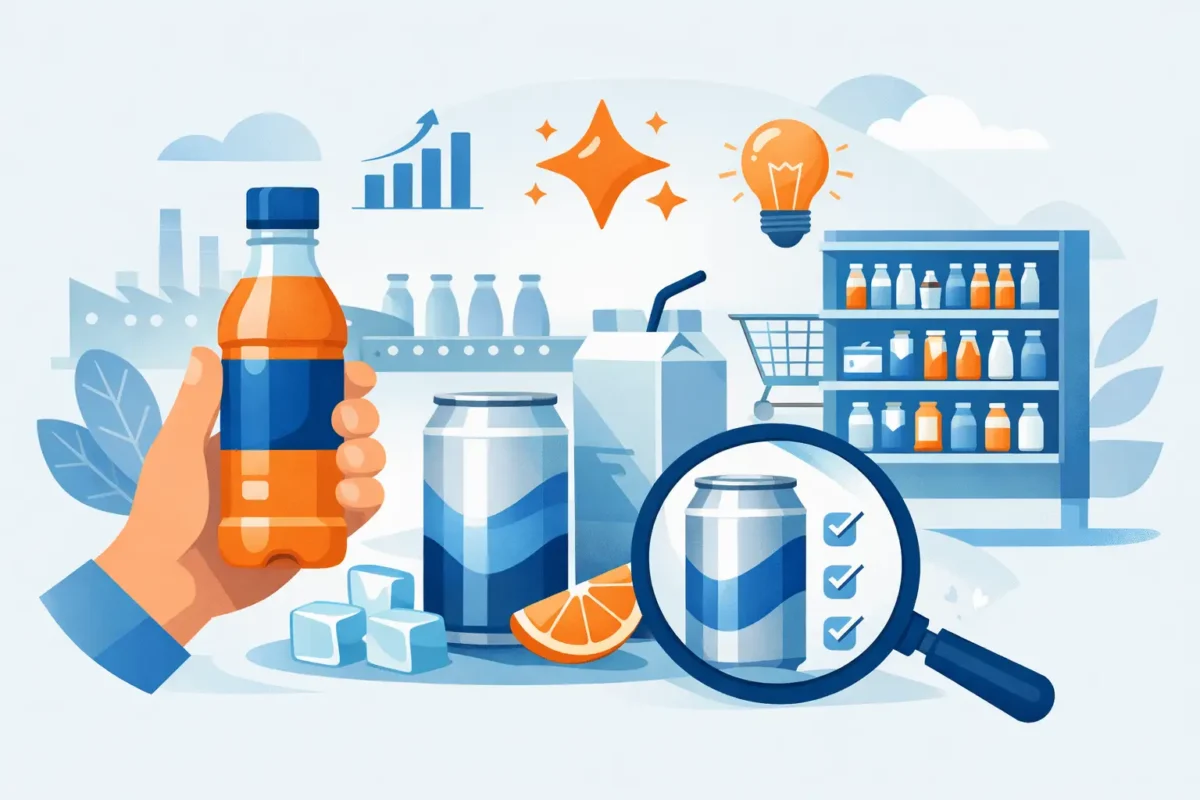
A great-tasting sample in a founder’s kitchen is not a retail proposition. That is the first hard truth. If you are asking what makes a drink retail ready, you are really asking whether your product can survive contact with buyers, manufacturers, margins, regulations, logistics and repeat purchase. Most drinks fail long before the shelf because they were built as ideas, not as commercial products.
Retail readiness is where ambition meets discipline. In drinks, you do not get rewarded for having a nice concept alone. You get rewarded for building something that can be made consistently, sold profitably, understood quickly and bought again. That is a different standard entirely.
What makes a drink retail ready in practice
Retail-ready drinks sit at the point where product, brand and commercial model all work together. If one part is weak, the whole launch becomes fragile. A drink can taste fantastic but fail on cost of goods. It can look sharp but have no clear reason to exist in the category. It can answer a trend but be impossible to manufacture at scale.
Founders often over-focus on taste and under-focus on the realities of scale-up. Taste matters, obviously. But taste on its own does not secure a listing. Buyers are looking for a product that fits a category gap, lands with a target consumer, makes sense on shelf, offers viable margin and arrives backed by proper operational thinking.
This is why retail readiness is not a single milestone. It is a commercial standard. You are proving that the drink is not just launchable, but sellable.
Your formulation has to work beyond the prototype
The first test is the liquid itself. Not whether friends like it, but whether it is stable, repeatable, legally compliant and commercially sensible.
A retail-ready drink needs a formulation that can be produced consistently across batches. That sounds obvious, yet plenty of early-stage brands build around ingredients, flavours or functional claims that become difficult or expensive once manufacturing starts. The version made by hand in a small test run is often not the version that performs in production.
Shelf life is another non-negotiable. If your drink is unstable, separates, loses flavour, changes colour or degrades faster than expected, you do not have a retail product. You have a costly problem. The same applies to functional drinks. If your hero benefit relies on a claim that cannot be substantiated or maintained through the product’s shelf life, that position weakens fast.
Then there is taste. For all the noise around wellness, no drink wins for long if it tastes like a compromise. Functional positioning may earn first purchase. Flavour earns the second. The strongest products balance efficacy, experience and price without pretending there is no trade-off. Sometimes a cleaner label affects sweetness profile. Sometimes a premium ingredient pushes cost beyond where the market will tolerate it. Retail readiness means making those calls early, not discovering them after packaging has been printed.
The category has to make sense
A drink can be well developed and still be badly positioned. This happens when founders chase trends without understanding the category they are entering.
You need to know where your product sits, who it is for and why a retailer should care. Is it an everyday hydration product, a functional wellness shot, a better-for-you soft drink, an energy alternative, a premium adult soft drink? Those are different spaces with different shopper expectations, price ceilings and routes to market.
If your proposition cannot be explained quickly, it is not ready. Retail is crowded and attention is short. Buyers and consumers both need clarity. What is it? Who is it for? Why now? Why this over what already exists? If those answers sound vague, overcomplicated or interchangeable with ten other brands, that is the issue to solve.
Packaging is part of the product, not decoration
One of the fastest ways to spot an unready drinks brand is packaging that was designed in isolation from commercial reality. A bottle or can is not just a branding canvas. It affects cost, shelf presence, logistics, filling options, recyclability and retail fit.
Your packaging format must match the occasion and price point. A premium glass bottle may look impressive, but it will not suit every channel or margin model. A sleek can might be right for convenience and impulse, but only if the product proposition and pack size support that route. The pack also has to communicate quickly. In a few seconds, the shopper needs to understand the brand, flavour, function and reason to buy.
Good packaging does not just look premium. It does a job. It holds its own next to established competitors, supports your positioning and works in the real conditions of distribution and retail. If it dents margin, confuses shoppers or creates manufacturing complications, it is not doing its job.
Compliance cannot be an afterthought
This is where many founders get caught out. A drink that looks launch-ready can still be commercially exposed if labelling, claims or specifications are wrong.
Ingredients, allergen handling, nutritionals, claims language, barcode setup, packaging specifications and technical documentation all need to be right. If you are making functional or health-led drinks, this becomes even more critical. What you imply on pack has to stand up. What you state has to be supportable. Getting this wrong does not just delay launch. It damages credibility with buyers and partners.
Retail readiness means your brand can withstand scrutiny. Not only from consumers, but from manufacturers, distributors and retailers who expect professionalism.
What makes a drink retail ready for buyers
Founders sometimes assume buyers are looking for novelty first. They are not. They are looking for evidence of sell-through potential.
A buyer wants to see a product that fits their customer, their shelf strategy and their commercial model. That means your pricing architecture matters. Your margins matter. Your pack format matters. Your category story matters. If you walk in with a drink that sounds exciting but cannot support retailer margin or has no clear shelf role, enthusiasm fades quickly.
You also need realistic route-to-market thinking. Not every product should start in major grocery. For some brands, independent retail, foodservice, gyms, hospitality or specialist health channels make far more sense at the beginning. Being retail ready includes understanding where you can win first, rather than chasing the biggest stage too early.
This is where straight-talking guidance matters. At Branding Innovations, we have seen founders burn time and money trying to force products into channels they were never built for. Retail readiness is not about acting big. It is about being commercially aligned.
Operations decide whether a launch has legs
Even if the product and brand are strong, poor operations can kill momentum fast. Can you source ingredients reliably? Can your manufacturer hit quality and volume requirements? Can your packaging components arrive on time? Can you cope with minimum order quantities without wrecking cash flow?
These are not back-office details. They are launch-critical. A drink becomes retail ready when supply, production and fulfilment are thought through well enough to support actual growth. Retailers do not want excuses about delayed stock, inconsistent batches or packaging shortages. They want confidence that you can deliver.
This is also where cost discipline matters. Plenty of drinks look exciting until the numbers are properly built. If your landed cost leaves no room for wholesale, distributor and retailer margin, the model is weak. If your first production run forces you into an unrealistic retail selling price, you may have built a niche product without realising it.
There is no shame in premium positioning if the market supports it. But there is a problem when the pricing is accidental rather than strategic.
The brand needs repeat-purchase potential
Retailers do not just buy launches. They buy products that can stay.
That means your drink must do more than generate curiosity. It needs the fundamentals for repeat purchase – taste, trust, relevance and consistency. If the first purchase is driven by a strong claim or eye-catching pack but the drinking experience disappoints, you have not built a brand. You have built a trial.
The strongest drinks brands are clear on their reason to exist and disciplined in how they express it. They do not try to say everything at once. They do not overload the front of pack. They do not rely on hype to cover weak product-market fit. They give consumers a reason to understand them quickly and buy them again.
That is the real answer to what makes a drink retail ready. It is not one feature, one document or one production run. It is the point where your product is credible, compliant, manufacturable, commercially viable and compelling enough to earn space on shelf.
If you are still ironing out flavour, claims, cost, channel or pack format, that does not mean the idea is bad. It means it is still in development. Better to face that honestly now than launch a drink that was never ready for the standards retail demands.
The founders who win are not always the ones with the loudest idea. More often, they are the ones who do the hard commercial work early, make sharper decisions and build a drink that can perform long after the launch buzz fades.