
A great drink idea can be ruined long before it reaches a customer. The recipe may taste exceptional, the branding may look sharp, and the wellness proposition may be genuinely differentiated. But if you cannot make the product consistently, legally and at a volume that works commercially, you do not yet have a viable drinks brand. That is where the question, what is a beverage co packer, becomes central to your launch plan.
A beverage co packer is not simply a factory that fills cans or bottles. For a founder, the right one is a production partner that turns an approved product specification into repeatable, shelf-ready stock. The wrong one can create delays, unexpected costs, inconsistent quality and a product that is impossible to scale.
What is a beverage co packer?
A beverage co packer, short for contract packer, manufactures and packages drinks on behalf of another brand. Rather than investing in your own factory, filling line, technical team and certification, you pay an established manufacturer to produce your drink to an agreed specification.
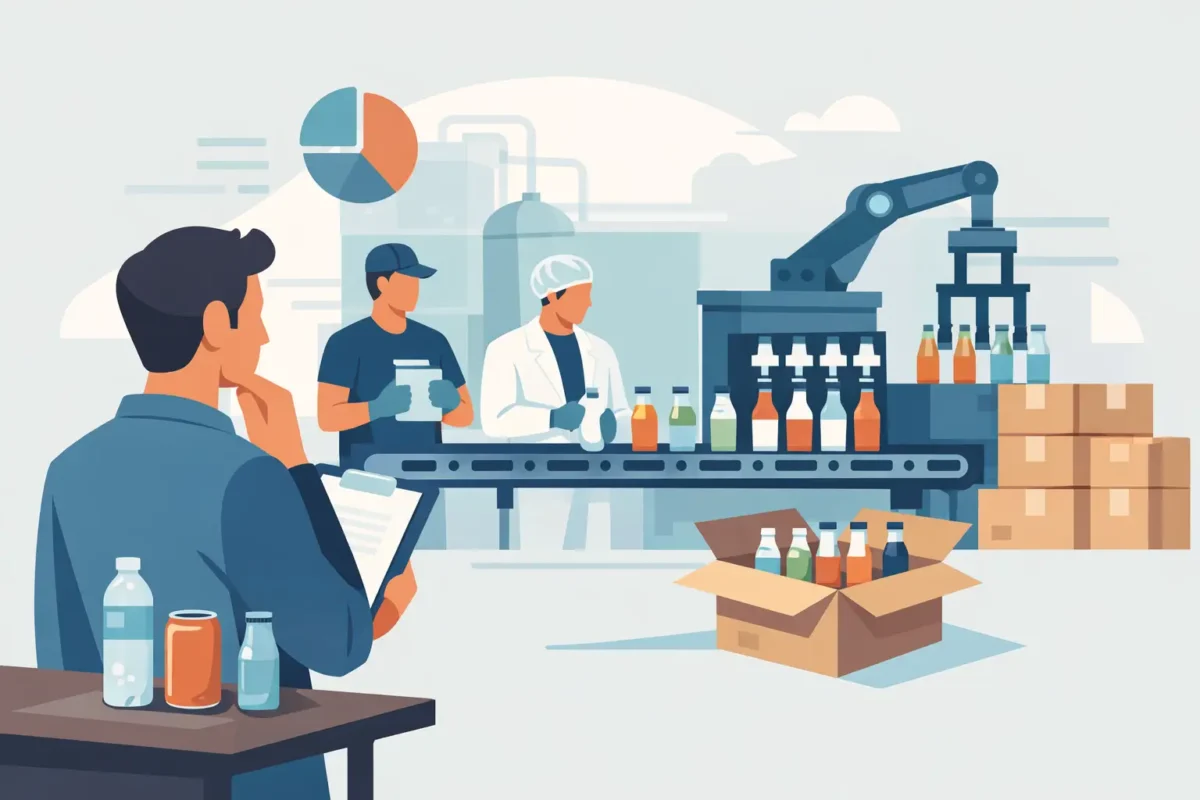
Depending on its capabilities, a co packer may source ingredients, blend the liquid, pasteurise it, carbonate it, fill cans, bottles or pouches, apply labels, case-pack the finished goods and arrange pallet storage. Some offer a highly complete service. Others do one part of the process, meaning you will need to coordinate ingredients, packaging and logistics yourself.
This distinction matters. Founders often assume every manufacturer offers the same service, then discover too late that their chosen site does not handle a key format, cannot work with a particular functional ingredient, or requires the brand to deliver every component on a precise date. Manufacturing is operationally unforgiving. A missing lid, delayed label or failed ingredient delivery can stop a production run.
Why founders use beverage co packers
Building a beverage factory is capital-intensive and difficult to justify until demand is proven. You need specialist machinery, food safety systems, trained staff, technical oversight, insurance, utilities and enough volume to keep the operation efficient. For an early-stage challenger brand, that is rarely the sensible first move.
A co packer gives you access to established equipment and production expertise without taking on that infrastructure yourself. It can also give buyers greater confidence. Retailers, distributors and wholesalers need assurance that a product can be supplied reliably, with consistent quality and the correct documentation behind it.
That said, outsourcing production does not mean outsourcing responsibility. Your name is on the can. You remain accountable for the product proposition, regulatory claims, brand standards, cash flow and commercial decisions. A co packer can make your drink. It cannot make people want it, rescue weak margins or fix a brand that has no route to market.
What a co packer does during production
The exact process varies by drink type, but most professional beverage production follows a clear sequence. Your formula and specification are reviewed first. The manufacturer then confirms whether the liquid can be made safely and consistently on its equipment, using the intended ingredients and packaging.
For a carbonated functional drink, that may involve batching the liquid, managing the order in which ingredients are added, checking pH and Brix, pasteurising where appropriate, carbonating, filling, coding and packing into cases. Quality checks take place throughout. Finished stock should be traceable by batch, with retained samples and records available if an issue arises.
A credible co packer also understands that the formula on paper is not always the formula that works at scale. Plant conditions, processing temperatures, ingredient interactions and shelf-life behaviour can change the final result. Botanicals can become more bitter. Protein may settle. Vitamins may degrade. Natural colours can fade. This is why bench samples, pilot trials and production trials are not optional admin. They are risk reduction.
Co packing is different from recipe development
Many founders arrive with a kitchen-made prototype and assume it is ready for a factory. Usually, it is not. A concept recipe may prove that the flavour direction is appealing, but commercial formulation requires far more detail: ingredient specifications, dosage rates, allergen status, processing method, nutritionals, declared values, shelf-life targets and regulatory compliance.
Some co packers have in-house development capability. Others expect a finished, factory-ready specification. Neither model is automatically better, but you need clarity before committing. If your drink needs work on taste, stability, functional dosage or compliant health positioning, get that work done before booking a full production run.
At Branding Innovations, this is where an integrated approach earns its keep. Product development, brand strategy, packaging decisions and manufacturing feasibility should inform each other early. It is expensive to develop a brilliant recipe that cannot be produced at your viable price point or filled in the packaging your target buyer expects.
How to choose the right beverage co packer
The best co packer is not necessarily the biggest or the cheapest. It is the one that can make your specific drink, in your preferred format, at a realistic minimum order quantity and with a process that supports where your brand is heading.
Start with technical fit. Ask whether the manufacturer has made products similar to yours. A still juice drink, ambient functional water, cold-filled kombucha, dairy alternative and high-protein shake all present different production challenges. Experience with your category reduces the risk of costly trial-and-error on your time.
Then assess format and capacity. Can they fill slim cans, standard cans, glass bottles, PET bottles or cartons? Can they handle nitrogen dosing, carbonation, hot fill, tunnel pasteurisation or aseptic processing where needed? What are their minimum order quantities, lead times and realistic monthly capacity? A factory may be able to take your first order but lack room when a major listing lands.
Do not overlook accreditation, traceability and quality systems. UK retailers and serious distributors will expect appropriate food safety standards, disciplined batch controls and clear documentation. Ask practical questions about their procedures for deviations, complaints, product recalls and retained samples. A confident manufacturer should answer directly.
Commercial fit is equally important. You need transparent pricing, not an attractive headline cost that excludes packaging, ingredients, warehousing, testing, palletisation, wastage allowances and freight. Ask what happens if yields are lower than expected, if you supply packaging that fails on the line, or if an ingredient changes price before production. The cheapest quote can become the most expensive run.
Minimum order quantities and the cash-flow reality
Minimum order quantity, often called MOQ, is one of the biggest hurdles for new beverage brands. It reflects the time needed to clean, set up and run a production line, as well as the factory’s need to operate efficiently. A small test batch may sound sensible, but it can carry a disproportionately high unit cost.
There is no universal MOQ. It depends on the pack format, process, ingredients and manufacturer. Some facilities are designed for smaller challenger-brand runs; others are built around large-scale output and will not be commercially suitable until you have substantial volume.
Do not choose a production quantity based on optimism alone. Build a realistic sales forecast around your route to market, expected listing timings, payment terms and storage capacity. Producing too little can damage margin and availability. Producing too much can tie up cash in stock with a limited shelf life. Founders need to make that decision with clear numbers, not excitement.
Questions to ask before you sign
Before appointing a co packer, establish who owns the formula, who purchases raw materials, who approves artwork and who is responsible for each stage of quality sign-off. Confirm lead times for repeat runs, payment schedules, cancellation terms and whether they can store your finished pallets.
You should also ask about shelf-life testing, transport conditions and how the product will be validated in its final pack. A drink that tastes right when it leaves the factory but fails after six weeks in a warm warehouse is not ready for commercial launch.
Finally, visit the site if possible. Walk the line, meet the people who will handle your product and see how the operation is run. Manufacturing partnerships rely on detail, but they also rely on communication. If answers are vague before you place an order, they will not become clearer once your cash and packaging are committed.
A co packer is one part of a commercial launch
The right manufacturing partner is a major advantage, but it is not a shortcut around the hard work of building demand. Before you commit to production, your drink needs a clear customer, a credible reason to exist, a compliant and commercially viable formula, packaging that works in the real world and a plan for getting stock into the right hands.
Treat co packing as a strategic decision, not a procurement task. When the recipe, pack, margins, manufacturing route and sales strategy are aligned, you give your brand its best chance of reaching the shelf and staying there.