
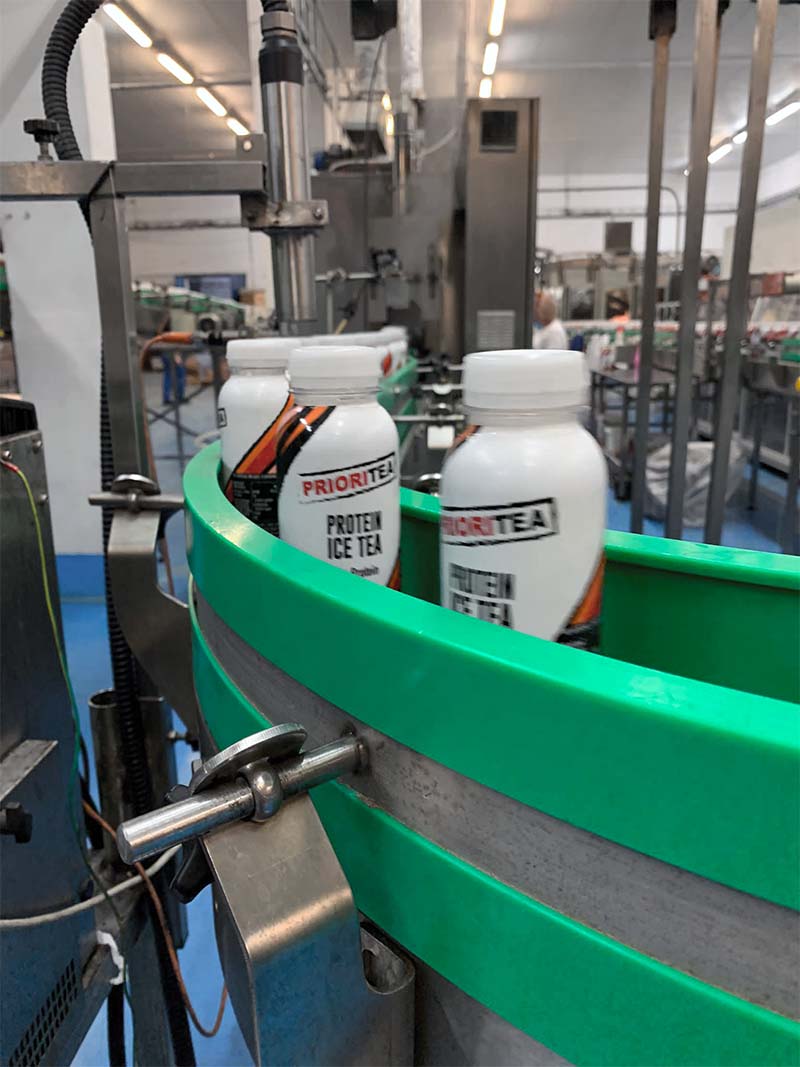
How to Get a Drink Manufactured: The Question Every Founder Must Answer First
How to get a drink manufactured? It is the question every drink brand founder eventually faces and the one most are least prepared for. Developing a recipe in your kitchen is one thing. Translating that recipe into a commercially produced, shelf-stable, retail-ready product is an entirely different discipline.
The manufacturing process is complex. It involves ingredient sourcing, co-packer selection, regulatory compliance, packaging decisions, production scheduling, quality control, and label compliance all running simultaneously. Get one element wrong and you face delays, wasted costs, or worse, a product that cannot be sold.
Most founders who fail in the drinks industry do not fail because of a bad idea. They fail because of poor execution choosing the wrong formulation path, misunderstanding real costs, missing regulatory requirements, and launching without a clear production strategy.
At Branding Innovations, we have guided over 200 drink brands through the full manufacturing journey from initial concept to retail-ready product. This article gives you the honest, complete guide to drink manufacturing in 2026 including the mistakes that cost founders thousands of pounds unnecessarily.
What Is a Co-Packer and Why Do You Need One?
Before answering how to get a drink manufactured, you need to understand the central figure in the process: the co-packer.
Beverage co-packing also called contract manufacturing, contract bottling, or co-manufacturing is the process of having a specialized facility produce and package your finished drink. A professional beverage co-packer manages the heavy lifting: batching, filling, packaging, pasteurization, labelling, and logistics. This allows brands to focus on marketing, sales, and growth while their partner handles precise production under food-safety and regulatory controls.
Contract manufacturing offers brand owners a cost-effective way to bring their products to market without the need for significant capital investment in manufacturing facilities and equipment. It allows them to focus on building their brand and expanding their product lines.
For the vast majority of new drink brands, working with a co-packer is the only commercially viable path to market. Building your own manufacturing facility requires capital investment of hundreds of thousands of pounds money that almost no start-up brand has available at launch stage.
The challenge is that co-packers are not all equal. They vary enormously in capability, capacity, minimum order quantities, quality standards, and the formats they can handle. Choosing the wrong one is one of the most expensive mistakes a brand founder can make.
Step 1 — Lock Your Recipe Before Approaching Any Manufacturer
This is the first and most frequently violated rule of drink manufacturing. Many founders approach co-packers with a recipe that is still in development. This wastes everyone’s time and often results in a frustrated co-packer who deprioritizes your project.
Your recipe must be finalised and commercially viable before you contact a single manufacturer. This means:
- It must be stable. A recipe that tastes great in your kitchen may behave completely differently at commercial scale. Heat treatment, carbonation, pH levels, ingredient interactions, and shelf life all change when production moves from a small jug to a 1,000-litre batch.
- It must be scalable. Ingredients that are simple to source in small quantities may have large minimum order requirements at commercial volume. Your recipe developer must account for this from the beginning.
- It must be regulatory-compliant. Teams must approve every ingredient for use in the UK market. They must also secure Novel Foods authorization from the Food Standards Agency before selling certain functional ingredients, including some mushroom extracts, novel botanical compounds, and specific adaptogen preparations. Using a non-approved ingredient in your recipe means your product cannot legally reach market regardless of how good it tastes.
- It must have verified nutritional information. Your label requires accurate nutritional data. This comes from laboratory testing of your final commercial formula not a calculation from a kitchen recipe.
Our recipe development team has over 40 years of experience producing commercially viable drink recipes. Whatever you have made in the kitchen will be unlikely to transfer to the factory for mass production. You need a recipe developer who translates your mix into a scalable formula for mass production, ensures accurate nutritional information for packaging, and verifies the legality of every ingredient.
Step 2 — Choose Your Packaging Format Early
Your packaging format decision must be made before you select a co packer. Different manufacturers specialize in different formats. A co-packer that excels at glass bottles may not have the capability for aluminum cans. Choosing your format first narrows your co-packer selection efficiently.
Breakdown of every major packaging format available to UK drink brands in 2026:
| Format | Minimum Run | Key Advantage | Key Disadvantage | Best For |
| Aluminium Cans | From 1,000 litres | Premium perception, 2-year shelf life, easy transport | Higher setup cost, requires specialist equipment | Functional drinks, energy, hydration |
| PET Plastic | Small runs possible | Lightweight, cost-effective, wide format range | Negative consumer perception around sustainability | Sports drinks, juices, water |
| Glass Bottles | Small runs possible | Premium brand positioning, consumer trust | Heavy, breaks easily, rejected by many wholesalers | Premium mixers, wellness shots |
| Tetra Pak | Large minimum orders | Excellent shelf life, sustainable perception | Very high minimum order quantities | Plant milks, juice, kids drinks |
| Pouches/Sachets | Low minimums | Low cost, easy shipping, strong DTC performance | Perceived as less premium | Powders, electrolytes, supplements |
| Concentrated Drops | Low minimums | Premium positioning, travel-friendly | Niche market, limited retail placement | Premium wellness, hydration |
Cans are available in 150ml, 250ml, 330ml and 500ml formats. They can be filled in runs as low as 1,000 liters by filling blank cans keeping overall cost down as they can be labelled at a later date. They are also much easier to transport and have a two-year shelf life, making them the least wasteful of all packaging options.
Glass presents significant commercial challenges in the UK. Many buyers will no longer stock glass due to weight, breakage during transport, and its poor performance in mail order a channel that has grown enormously in recent years. Unless your brand specifically demands glass for positioning reasons, cans or PET are generally the more commercially sensible choices for a new UK drink brand.
Step 3 — Source Your Ingredients Before Production
Ingredient sourcing creates one of the most underestimated challenges in drink manufacturing. Many first-time founders assume they can easily purchase ingredients in the quantities needed for their first production run but that is often not the case.
Suppliers often set large minimum order quantities, even when founders only need a fraction of that amount. Where possible, encourage suppliers to reduce these minimums to reduce wastage. If this is not an option, ask suppliers for sample amounts at no charge to create ease when making future larger runs.
The most critical ingredients to source and verify before production begins are:
1-Functional and novel ingredients. Adaptogen extracts, nootropic compounds, functional mushroom powders, and specific botanical extracts can have long lead times. Some suppliers operate on 8–12 week lead times for specialist ingredients. Leaving ingredient sourcing until after production is booked creates a guaranteed scheduling crisis.
2-Natural sweeteners. Monk fruit extract, stevia, and erythritol from quality suppliers require advance planning. Low-quality versions of these ingredients are widely available but they underperform in taste and stability. Always source from verified suppliers with full technical data sheets.
3-Natural flavour compounds. Cold-pressed citrus oils, freeze-dried fruit powders, and botanical extracts require careful sourcing. Quality varies enormously between suppliers. Always request samples and run taste tests before committing to a full ingredient order.
At Branding Innovations, our production service manages ingredient sourcing for every brand we develop. We research suppliers, negotiate minimums, verify quality, and ensure every ingredient arrives on time and to specification. This eliminates one of the most common sources of production delay for new brands.
Step 4 — Select the Right Co-Packer for Your Specific Brief
This is where how to get a drink manufactured becomes genuinely complex. The UK market has hundreds of co-packers. Finding the right one for your specific format, ingredient profile, volume requirements, and timeline requires experience and industry contacts that most new founders simply do not have.
The best beverage co-packers operate like an extension of your own company. They maintain certified facilities SQF, GMP, HACCP, Kosher, Halal and can scale from pilot runs to national volume. Here is what to evaluate when selecting a co-packer:
Capability Match
Does the co-packer handle your chosen format? Can they work with your specific ingredients — including any functional compounds that require specialist handling? Do they have experience with your drink type carbonated, still, hot-fill, cold-fill, or ambient?
Certifications
Any serious co-packer must hold current food safety certifications. In the UK, the minimum requirement is a BRC (British Retail Consortium) Global Standard certification. Many major retail buyers will not accept product from uncertified facilities. Verify certifications before signing any agreement.
Minimum Order Quantities (MOQs)
Estimate your anticipated volume before speaking with any co-packer. Knowing your volume upfront allows more productive conversations, better quotes, and a smoother transition to full-scale production. It helps identify co-packers whose minimums suit your needs and whether they can scale to accommodate future growth.
MOQs vary significantly across UK co-packers. Some operate with minimums as low as 1,000 liters per run. Others require 10,000 liters or more. Starting with a co-packer whose minimum suits your initial volume while having the capacity to scale is a critical strategic decision.
Transparency and Communication
Transparency and good communication with the co-packer means everything will go as smoothly as possible to produce the exact recipe requested.
Co-packers that are slow to respond, vague about timelines, or reluctant to share technical specifications are almost always a problem waiting to happen. Communication quality during the selection process is a reliable indicator of how the production relationship will function.
NDA and IP Protection
To protect intellectual property and maintain product confidentiality, contracts between the brand owner and co-packer should include non-disclosure agreements and confidentiality clauses. Never share your final recipe with a co-packer without a signed NDA in place first. This is non-negotiable.
Step 5 — Submit Your Recipe and Approve Samples
Once you have selected a co-packer, the approval process begins. This involves submitting your finalised recipe to the co-packer’s technical team, who assess how it will perform in their production environment.
Getting a product approved for production involves recipes and samples being sent so the co-packer can understand how the product will work in their environment. The larger the company, the more complex this process can be.
The co-packer will typically produce a small pilot batch often called a trial run or first-off sample. This is your opportunity to verify that the product produced at commercial scale matches your approved recipe exactly. Check:
- Taste, colour, and aroma match your development samples precisely
- Carbonation level is correct (if applicable)
- pH is within specification
- Nutritional profile matches your label declaration
- Packaging performs correctly seals, labels, closures
Do not approve production until you are completely satisfied with the trial samples. Changes after a full production run are extraordinarily expensive. Patience at the trial stage saves significant money later.
Step 6 — Manage Labels and Packaging Compliance
Label compliance is one of the most technically complex aspects of bringing a drink to market. UK food labelling law governed by the Food Information to Consumers Regulation sets out mandatory requirements for every drink sold commercially. Your label must include:
- Product name and description
- Full ingredients list in descending weight order
- Nutritional declaration per 100ml (and per serving where relevant)
- Net quantity
- Best before or use by date
- Storage instructions
- Name and address of the responsible food business operator
- Country of origin (where required)
- Allergen declarations in bold within the ingredients list
- Alcohol content (for alcoholic drinks)
- Any required advisory statements
For functional drinks making health or nutrition claims, only claims listed on the UK Register of Nutrition and Health Claims are permitted. Claims must use approved wording exactly. Getting this wrong can result in regulatory enforcement action and product withdrawal from retail.
Teams must meticulously check labels to ensure the beverage branding design meets the co-packer’s printing specifications, presents the brand at its best, and remains technically correct for production.
Our brand development team handles full label compliance review for every brand we develop from initial design through to final pre-production artwork sign-off. This step is frequently underestimated by new founders and represents one of the most common sources of costly delay.
Step 7 — Manage Production Scheduling Rigorously
Production scheduling is a discipline in itself. Co-packers run complex multi-client schedules. A single delayed ingredient delivery can push your production slot back by weeks or months.
If a deadline has been set for the final product, it is critical to stick to the schedule. Just one late delivery can mean a several-week or several-month delay in production.
Build your production schedule backwards from your required delivery date. Identify every critical path item ingredients, packaging components, labels, and co-packer availability — and apply buffer time to each. Assume delays will happen. Plan for them before they do.
The key scheduling disciplines that protect your timeline:
- Confirm ingredient lead times before booking production. Never book a production slot without confirmed ingredient availability.
- Order packaging components early. Cans, bottles, and specialist closures frequently have 6–10 week lead times from suppliers. Leaving packaging ordering until after production is booked is a critical error.
- Confirm label artwork before production. Labels sent to the printer with errors even small ones create delay and cost. Approve final artwork through multiple sign-off stages before sending to print.
- Communicate proactively with your co-packer. Flag any potential delays immediately. Co-packers appreciate transparency and can often accommodate minor changes if given sufficient notice. Surprises are far more disruptive.
Step 8 — Arrange Sleeving, Secondary Packaging, and Logistics
For many drink brands, the manufacturing process extends beyond the co-packer’s facility. Teams often complete sleeving applying a shrink-sleeve label to a can or bottle off-site with a specialist provider when the co-packer does not offer it in-house.
When in-house sleeving isn’t available, teams arrange it with specialist companies and schedule it carefully to avoid disrupting production timelines.
Teams also plan and produce secondary packaging outer cases, shelf-ready packaging (SRPs), and retail display units in advance. Retail buyers often specify their own SRP requirements, so teams confirm these details before committing to production.
Logistics planning from co-packer to warehouse, and from warehouse to retail or DTC fulfilment must be in place before your first production run arrives. Storage costs money. Unplanned storage costs a great deal more. Have your fulfilment and distribution arrangement confirmed before your product leaves the co-packer.
The Most Common and Costly Manufacturing Mistakes
After nearly two decades and over 200 brand launches, here are the manufacturing mistakes we see most frequently and how to avoid them.
Mistake 1 — Approaching Co-Packers Too Early
Founders who approach co-packers before their recipe is finalised waste months in unproductive conversations. Co-packers cannot give accurate quotes or timeline commitments without a finalised recipe and confirmed packaging brief. Complete your recipe development and packaging decisions first.
Mistake 2 — Choosing a Co-Packer Based on Price Alone
The cheapest co-packer is almost never the best choice. Low-cost manufacturers frequently have inadequate certifications, poor communication, and inconsistent quality control. Choosing the wrong co-packer is one of the most expensive mistakes a drink brand founder can make. Invest time in proper due diligence.
Mistake 3 — Underestimating Lead Times
New founders consistently underestimate how long the manufacturing process takes end-to-end. From finalised recipe to retail-ready product, a realistic timeline is 16–24 weeks for a first production run. This accounts for co-packer approval, trial samples, label compliance, ingredient sourcing, production scheduling, and logistics.
Mistake 4 — Ignoring Regulatory Compliance
Using an ingredient without confirming its regulatory status is a catastrophic error. Not all ingredients are allowed to be used. Understanding Novel Foods regulations and the health and taxation issues surrounding sugar levels is essential before production begins. Always confirm the regulatory status of every ingredient before finalising your recipe.
Mistake 5 — Over-Ordering on the First Run
The temptation to order a large first production run to reduce per-unit cost is understandable but dangerous. Until you have proven market demand through trial, ordering conservatively protects your cash flow. Many brands have been left with 20,000 unsold units because they over-ordered on their first run before confirming retail listings or consumer demand.
Mistake 6 — Cutting Corners on Label Design
There is a big difference between a designer with technical skills and a brand consultant who can speak to your target market through the messaging on the drink’s packaging design. Using a friend or family member to bring your design to life will likely only end up costing extra time and money. A label that fails regulatory compliance review or simply does not work commercially on shelf is an expensive problem at the production stage.
What Does It Cost to Get a Drink Manufactured in 2026?
Cost transparency is essential for any founder planning a production run. Here is a realistic breakdown of the key cost components in UK drink manufacturing in 2026.
| Cost Component | Estimated Range (UK 2026) | Notes |
| Recipe development | £3,000–£15,000 | Depends on complexity and number of iterations |
| Ingredient sourcing (first run) | £2,000–£20,000 | Varies significantly by ingredient profile |
| Co-packer trial/pilot run | £1,500–£5,000 | Essential — do not skip this stage |
| Full production run (10,000 units) | £15,000–£50,000 | Depends on format, volume, ingredient cost |
| Packaging components | £2,000–£10,000 | Cans, bottles, closures, outer cases |
| Label design and print | £1,000–£5,000 | Includes compliance review and artwork |
| Sleeving (if required) | £500–£3,000 | Per production run |
| Logistics and storage | £500–£3,000 | Co-packer to warehouse |
| Regulatory and compliance | £500–£3,000 | Novel Foods check, health claim review |
A realistic total investment for a first UK production run from finalized recipe to warehouse-ready product is typically £25,000–£80,000, depending on format, volume, and ingredient complexity. The food and drink industry can consume significantly more cash than many other sectors. Anyone serious about launching a drink brand must understand these costs before committing to the process.
How Branding Innovations Manages the Manufacturing Process
Understanding how to get a drink manufactured is one thing. Actually managing the process across suppliers, co-packers, regulators, and timelines is another entirely. This is where most founders benefit most from experienced support.
Our production service manages the full manufacturing journey for every brand we develop. This includes:
- Ingredient supplier research — we identify and negotiate with the highest-quality suppliers for every ingredient in your formula, including functional compounds, natural sweeteners, and botanical extracts.
- Co-packer selection and management — we identify the right co-packer for your specific format, brief, and volume requirements. We manage all communications, approvals, and scheduling on your behalf.
- Label compliance review — our team reviews every element of your label design against current UK food labelling regulations and health claim requirements before artwork goes to print.
- Production scheduling — we build and manage your production timeline, flagging risks and managing supplier coordination to protect your launch date.
- Quality control — we review trial samples against your approved recipe and ensure the final product meets your exact specification before full production is approved.
One of our recent clients, VitClear, described their experience: “Their network led to seamless manufacturing, fulfilment, and buyer relations, helping us connect to the right partners at every stage. Their straightforward, no-nonsense approach allowed us to go from concept to distribution in just six months.”
That timeline concept to distribution in six months is achievable when the manufacturing process is managed properly from the start.
Expert Insight: What We Know About Drink Manufacturing in 2026
After nearly two decades and over 200 brand launches, here is what our direct experience tells us about the manufacturing journey.
The brands that navigate manufacturing successfully treat it as a project management challenge, not just a production exercise. They plan backward from their launch date, confirm every critical path item before moving to the next stage, and communicate proactively with every supplier and co-packer in their chain. And they budget for the unexpected because the unexpected is a standard feature of first-time production runs.
The brands that struggle treat manufacturing as something that happens after the “interesting” parts of building a brand — the recipe, the branding, the excitement of launch planning. They underinvest in the process, rush the supplier research, skip the trial run, and launch with a product that is not ready.
In the drinks industry, you rarely get a second first impression. A product that fails its first production run through poor quality, non-compliance, or supply chain failure can permanently damage buyer relationships that took months to build.
Get the manufacturing right. Everything else follows.
FAQs: How to Get a Drink Manufactured?
Q: How long does it take to get a drink manufactured in the UK?
For a first production run, the realistic timeline from finalised recipe to warehouse-ready product is 16–24 weeks. This covers co-packer approval, trial samples, ingredient sourcing, label compliance, and logistics. Founders who plan for this timeline consistently avoid the delays that damage launch schedules.
Q: What is a co-packer and how do I find one in the UK?
A co-packer is a contract manufacturer that produces and packages your drink to your specification. Finding the right one requires matching their capabilities, certifications, minimum order quantities, and experience to your specific product brief. Working with an experienced drinks development agency provides immediate access to vetted co-packer relationships built over years.
Q: What certifications should a UK drink co-packer hold?
The minimum requirement is BRC Global Standard food safety certification. Many major UK retailers will not accept product from non-BRC-certified facilities. Additional certifications HACCP, SQF, Organic, Kosher, Halal may be required depending on your product positioning and target retail channels.
Q: How much does it cost to manufacture a drink in the UK in 2026?
A realistic total investment from finalised recipe to warehouse-ready product is £25,000–£80,000 for a first run, depending on format, volume, and ingredient complexity. The biggest cost variables are production volume, ingredient profile, and packaging format. Cans generally offer the best cost-per-unit at scale for functional drink brands.
Q: Do I need a Novel Foods authorisation for my functional drink ingredients?
Some functional ingredients including certain mushroom extracts, botanical compounds, and adaptogen preparations may require Novel Foods authorization from the UK Food Standards Agency. Confirming the regulatory status of every ingredient before finalizing your recipe is non-negotiable. Using a non-approved ingredient means your product cannot legally be sold in the UK.
Q: Can I manufacture a drink brand without using a co-packer?
Technically yes but building your own manufacturing facility requires capital investment of hundreds of thousands of pounds and years of operational setup. For the vast majority of start-up and scale-up drink brands, co-packing is the only commercially viable manufacturing path. The brands that attempt to manufacture independently without deep industry experience almost always fail.
Final Thoughts: Manufacturing Done Right Is the Foundation of Everything
How to get a drink manufactured? The honest answer is: carefully, patiently, and with experienced support at every stage. The manufacturing process is not glamorous. It does not generate the excitement of recipe creation or brand design. But it is the foundation on which everything else is built.
A beautifully branded drink that fails its trial run, misses its launch window, or reaches retail with a non-compliant label destroys months of investment in seconds. A properly manufactured drink produced to specification, on time, at the right cost, with full regulatory compliance gives your brand the platform it needs to succeed in one of the most competitive markets in the world.
The brands that treat manufacturing as a strategic priority investing properly in recipe development, co-packer selection, regulatory compliance, and production management are the ones that reach market with a product they are proud of and buyers are willing to list.
If you are ready to move your drink concept into production and want expert guidance on every stage of the manufacturing process, speak to our team today. We offer a free initial consultation. We will give you an honest assessment of your manufacturing readiness and a clear pathway to getting your drink on shelf.
Read our Book for Guidance
Branding Innovations is the UK’s leading specialist in drink development, branding, and product launch. Our production team manages the full manufacturing journey from ingredient sourcing and co-packer selection to label compliance and logistics. We have developed and launched over 200 brands worldwide. Our recipe development team has over 40 years of formulation experience.
For further reading on the full brand building journey, explore our related articles on recipe development, brand development, beverage brand marketing campaigns, and how much it costs to develop a new drink.