
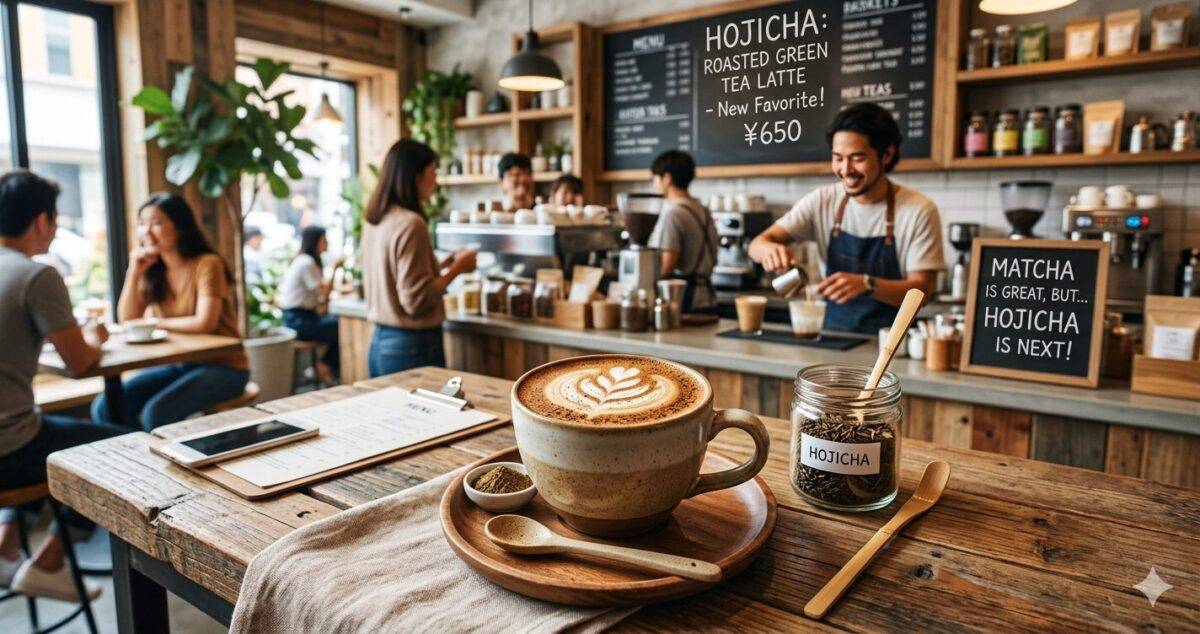
Hojicha Is Having Its Moment — And the Timing Could Not Be Better
Over the past decade, matcha went from a niche health-food ingredient to a global phenomenon. It moved from specialist tea shops into mainstream cafés, supermarkets, protein powders, and functional drinks. Its combination of caffeine, L-theanine, and antioxidants made it the go-to alternative to coffee for a generation of health-conscious consumers. But matcha’s dominance is facing a challenge. Global supply is strained. Prices are rising. And a new Japanese tea is moving quietly but powerfully into the space left open by matcha’s shortage and price premium. That tea is hojicha.
Hojicha is emerging as the new flavour trend for 2026 and beyond. Its low caffeine and smooth taste are driving broader consumer appeal. Applications span RTD beverages, cafés, desserts, confectionery, and savoury foods, and supply is expanding as manufacturers seek alternatives amid matcha shortages.
Searches for “hojicha latte” increased by 173% globally since early 2025, according to consumer trend data from Spate, while searches for “hojicha” itself rose by 54.6%. The movement is real, measurable, and accelerating.
For food and drink brand founders, this trajectory matters enormously. The ingredient category that matcha occupies, sophisticated, Japanese-heritage, health-aligned, café-native, is a commercially powerful space. Hojicha is positioning itself to own the next chapter of that story.
What Is Matcha? Understanding What Hojicha Is Following
Matcha comes from the same plant as green tea — Camellia sinensis — but is produced differently. Tea plants are shaded for several weeks before harvest. This process increases chlorophyll production and preserves amino acids, including L-theanine — contributing to matcha’s distinctive flavour and functional benefits.
Unlike traditional tea, where leaves are steeped and removed, matcha is finely ground into powder. The entire leaf is consumed. This delivers higher levels of antioxidants and bioactive compounds per serving than any steeped tea can match.
Functional drinks are one of the strongest beverage trends in 2026. Matcha is frequently combined with collagen, adaptogens, probiotics, and mushrooms — placing it at the centre of wellness-focused tea trends. Ready-to-drink matcha is also growing fast in retail and foodservice.
Matcha is not disappearing. But its dominance is creating a natural opening for something new.
What Is Hojicha? The Ingredient Every Drink Brand Should Know
Hojicha (ほうじ茶) is also made from green tea, but it undergoes an additional roasting process after harvesting. Leaves are roasted at high temperatures, completely transforming their colour and flavour profile.
The roasting process changes the tea from green to a warm brown. It creates a flavour profile that consumers consistently describe as:
- Toasted hazelnuts
- Caramel
- Roasted chestnuts
- Light cocoa
- Gentle smokiness
One of hojicha’s biggest strengths in the 2026 market is its simplicity and traceability. With just tea leaves and fire-roasting, it checks all the boxes for consumers seeking transparency and low-intervention ingredients.
For anyone who finds matcha too grassy, too bitter, or too intense, hojicha is a dramatically more approachable entry point — without sacrificing the Japanese tea heritage that makes this ingredient category so commercially compelling.
Why Hojicha Is Gaining Traction So Rapidly in 2026
1. Lower Caffeine Content — The Calm Energy Opportunity
Hojicha naturally contains significantly less caffeine than matcha. The roasting process reduces caffeine levels. The use of more mature leaves and stems in its production reduces it further.
| Drink | Approximate Caffeine |
| Coffee | 80–120mg |
| Matcha | 30–70mg |
| Hojicha | 10–30mg |
Hojicha is a roasted Japanese green tea with a toasty, caramelized flavour and significantly lower caffeine content than matcha. It offers warmth and depth without bitterness — and taps into the same Japanese tea heritage as matcha, but with a more mature, less hype-driven aesthetic.
This positions hojicha directly in the “calm energy” trend — one of the most commercially powerful consumer movements in the UK drinks market right now. Consumers actively seek beverages that provide a gentler stimulant experience. Hojicha delivers that with genuine credibility.
2. A More Accessible Flavour Profile
Matcha’s earthy, grassy, slightly bitter character is polarising. Many consumers who want the health credentials of Japanese green tea simply do not enjoy the taste of matcha at full strength.
Hojicha removes that barrier entirely. Its smooth, roasted, caramel-forward profile pairs exceptionally well with milk — dairy or plant-based — making it ideal for:
- Hojicha lattes (hot and iced)
- Hojicha cold brews
- Hojicha frappes
- Functional RTD beverages
- Protein drinks and wellness shots
The UK Tea & Infusions Association confirmed on 10 January 2026 that hojicha was “making waves” in UK cafés, with the hojicha latte emerging as the clearest driver of demand. The association also pointed to hojicha-infused ice creams, smoothies, and baked goods — a sign that operators are treating it as more than a single-drink trend.
3. The Matcha Shortage Has Created a Direct Commercial Opportunity
A global matcha shortage, reported as early as November 2024, has contributed to hojicha’s rise as a more affordable and readily available substitute. Hojicha is made from older tea leaves or byproducts — offering a more cost-effective option compared to ceremonial-grade matcha while still carrying strong Japanese tea credentials.
This supply-driven push — combined with genuine consumer pull from the flavour and functional positioning — creates one of the most compelling ingredient opportunity windows the functional drinks market has seen in years.
Hojicha vs Matcha: A Direct Comparison
| Feature | Hojicha | Matcha |
| Colour | Warm brown | Vibrant green |
| Taste | Roasted, nutty, caramel | Grassy, vegetal, slightly bitter |
| Caffeine | Low (10–30mg) | Moderate (30–70mg) |
| L-theanine | Lower | Higher |
| Antioxidants | Good | Typically higher |
| Milk compatibility | Excellent | Good |
| Beginner-friendliness | Very high | Moderate |
| Social media maturity | Emerging | Established |
| Supply availability 2026 | Good | Constrained |
| Price point | More accessible | Premium/rising |
The comparison reveals something important for brand founders. Hojicha does not beat matcha on every metric — and it does not need to. It occupies a distinct and commercially compelling adjacent territory.
The Global Trend Data: What the Numbers Say
A report from Oatly — collating insights from over 200 baristas and drinks experts across 23 countries — highlights the growing prominence of East and Southeast Asian flavours, including hojicha. These ingredients, now frequently found in everything from lattes to cocktails, are a continuation of the “Matchamania” that has driven interest in other Asian ingredients globally.
Hojicha’s rich antioxidant profile, digestive-friendly properties, and low caffeine levels make it a standout ingredient in functional beverages and health-forward foods. What was once considered a humble everyday tea is now being embraced as a multi-functional, wellness-aligned ingredient across the global food and beverage industry.
The functional beverage market context amplifies this further. The UK functional beverage market was projected to reach £2.4 billion in 2024, supported by a broader wellness trend in which consumers place greater emphasis on products that actively support their physical and mental health. Hojicha enters this growing market as a clean, natural, heritage-backed functional ingredient with compelling consumer communication credentials.
What This Means for Food and Drink Brand Founders
At Branding Innovations, we track ingredient trends specifically for the commercial signal they send to brand founders. Hojicha in 2026 sends a clear one.
The ingredient has moved past the novelty phase. The product has secured a place on mainstream UK café menus, demonstrated strong growth in search interest, and offers a compelling consumer proposition through lower caffeine content, an approachable flavour profile, and authentic Japanese heritage. It also benefits from reliable supply availability at a time when comparable alternatives face supply constraints. And it has not yet been commoditized.
This is the window. The brands that build with hojicha now — with genuine recipe development, strong brand positioning, and clean-label formulation — will own a market position before the category becomes crowded.
How to Build a Hojicha-Based Drink Brand
The most commercially effective approaches we are seeing in 2026:
Hojicha functional RTD. A ready-to-drink hojicha latte format with added functional ingredients — L-theanine (to complement hojicha’s natural calm energy profile), adaptogens, or prebiotic fibre. Hojicha is already gaining traction in RTD products, specialty lattes, plant-based milk drinks, cold brews, and functional beverages, where its low caffeine content is a major selling point.
Hojicha wellness shot. A concentrated 60–100ml hojicha shot with added functional compounds — magnesium for stress, ashwagandha for cortisol management, or B vitamins for energy metabolism. Positioned for the evening wind-down or afternoon calm energy occasion.
Hojicha protein drink. Pairing hojicha’s caramel, nutty flavour notes with plant-based protein creates a genuinely distinctive post-workout or meal-replacement format. The flavour masks protein’s characteristic bitterness far more effectively than many conventional options.
Hojicha powder or latte blend. A retail or DTC sachet format — hojicha powder blended with natural sweetener (monk fruit or coconut sugar) and plant-based milk powder. Positions directly against matcha powder on Amazon and health food retail shelves.
Our recipe development team has developed formulations using Japanese-heritage tea ingredients across multiple formats. Getting the dose, flavour balance, and shelf stability right at commercial scale is a technical process — not a kitchen experiment. The functional additions must be verified against the UK Food Standards Agency Novel Foods register before production begins.
Will Hojicha Replace Matcha?
The honest answer is no — and that is the wrong question entirely.
Matcha has earned a permanent position in the UK drinks landscape. Its vibrant colour, social media visual appeal, and established nutritional profile are too embedded to be displaced. Matcha is not going anywhere.
But hojicha does not need to replace matcha to be a significant commercial success. Hojicha signals flavour-led innovation beyond functional positioning — opening applications across RTD beverages, cafés, desserts, and confectionery that matcha cannot easily fill due to its strong visual identity and flavour intensity.
What hojicha creates is an adjacent, complementary market segment — one that serves consumers who want Japanese tea heritage without matcha’s intensity. Consumers who need lower caffeine. Consumers who want warm, comforting flavour over grassy brightness. And consumers who want the next thing, which is always, commercially, the most valuable consumer of all.
If matcha was the wellness drink of the last decade, hojicha has a genuine claim to be one of the most exciting functional ingredients of the next.
The Brand Development Opportunity: Act Before the Category Matures
The hojicha market is poised for continued growth, fuelled by its unique appeal as an affordable, novel, and health-conscious beverage. Strategic focus on product quality, sustainable sourcing, and targeted marketing will be crucial for success. Businesses should prioritize developing and marketing hojicha latte products — including ready-to-drink options — to capitalize on existing consumer demand.
The window for first-mover advantage in the UK hojicha functional drinks space is open right now. The consumer trend data is clear. The retail environment is receptive. The ingredient supply is available. And the brands that invest properly in recipe development, brand identity, and commercial launch strategy in 2026 will establish market positions that become very difficult to displace as the category matures.
For a deeper understanding of how to build a functional drink brand in an emerging ingredient category, see our articles on nootropic drinks and brainpower, innovative flavour trends, and functional mocktails and adult soft drinks.
FAQs: Could Hojicha Become the Next Matcha?
Q: What is hojicha, and how is it different from matcha?
Hojicha is a Japanese green tea roasted at high temperatures after harvesting, giving it a warm brown colour and a caramel, nutty flavour profile. Matcha is shade-grown and ground into a fine green powder with a grassy, vegetal taste. Hojicha contains significantly less caffeine than matcha — typically 10–30mg per serving versus 30–70mg — making it a calmer, more approachable alternative with strong functional positioning.
Q: Why is hojicha gaining popularity in the UK in 2026?
Three forces are driving hojicha’s rise simultaneously. A global matcha shortage has pushed cafés and manufacturers to seek alternatives. Consumer demand for lower-caffeine, calm-energy beverages is accelerating. And flavour-forward innovation in the functional drink space is creating strong demand for distinctive, heritage-backed ingredients beyond standard matcha and green tea. The hojicha latte is the primary growth format, confirmed as “making waves” in UK cafés by the UK Tea & Infusions Association in January 2026.
Q: Is hojicha a good ingredient for a new functional drink brand?
Yes — and the timing is particularly compelling in 2026. Hojicha carries genuine functional credentials (antioxidants, low caffeine, digestive-friendly properties), outstanding flavour compatibility with plant milks and functional compounds, Japanese heritage provenance, and strong consumer search trend momentum. For brand founders entering the functional RTD, wellness shot, or café-format drink space, hojicha offers a distinctive, credible, and commercially underserved ingredient positioning.
Q: What functional ingredients pair well with hojicha in a drink formulation?
Hojicha’s warm, roasted flavour profile pairs particularly well with L-theanine for enhanced calm-energy positioning, magnesium for stress and sleep support, ashwagandha for adaptogenic cortisol management, prebiotic fibre for gut health crossover, and B vitamins for energy metabolism. All functional additions must be verified against UK Novel Foods regulations and health claim requirements before commercial use.
Q: How do I build a commercial drink brand using hojicha as the hero ingredient?
Start with professional recipe development to ensure your hojicha formulation achieves consistent flavour at commercial scale, adequate shelf stability, and any functional ingredient integration at clinically relevant doses. Then build a brand identity that communicates the Japanese heritage story and calm-energy consumer benefit instantly from the front of pack. Work with an experienced drink development partner who can manage co-packer selection, regulatory compliance, and buyer approach — compressing the journey from concept to shelf significantly.
Final Thoughts: Hojicha Is a Trend Worth Building a Brand Around
The evidence in 2026 is consistent across every data point that matters — consumer search trends, café menu adoption, industry expert consensus, ingredient supply dynamics, and consumer functional beverage demand.
Hojicha has earned its place as one of the most commercially compelling emerging ingredients in the UK food and drink market. The question for brand founders is not whether the trend is real. It demonstrably is. The question is whether they move now — while first-mover advantage is still available — or wait until the category is as crowded as matcha has become.
The brands that act in 2026, with genuine recipe investment, strong brand positioning, and strategic market access, will be the names consumers seek out when hojicha becomes the ingredient everyone is talking about.
If you have a hojicha-based drink concept and want expert guidance on developing it into a market-ready commercial product, speak to our team today. We offer a free initial consultation and bring 20 years of UK functional drink development expertise to every conversation.
Branding Innovations is the UK’s leading specialist in drink development, branding, and product launch. We have developed and launched over 200 brands worldwide. Our recipe development team has over 40 years of functional beverage formulation experience.
Read our Book for Guidance
For further reading, explore our related articles on innovative flavour trends, natural flavours without artificial sweeteners, nootropic drinks and brainpower, and recipe development.