
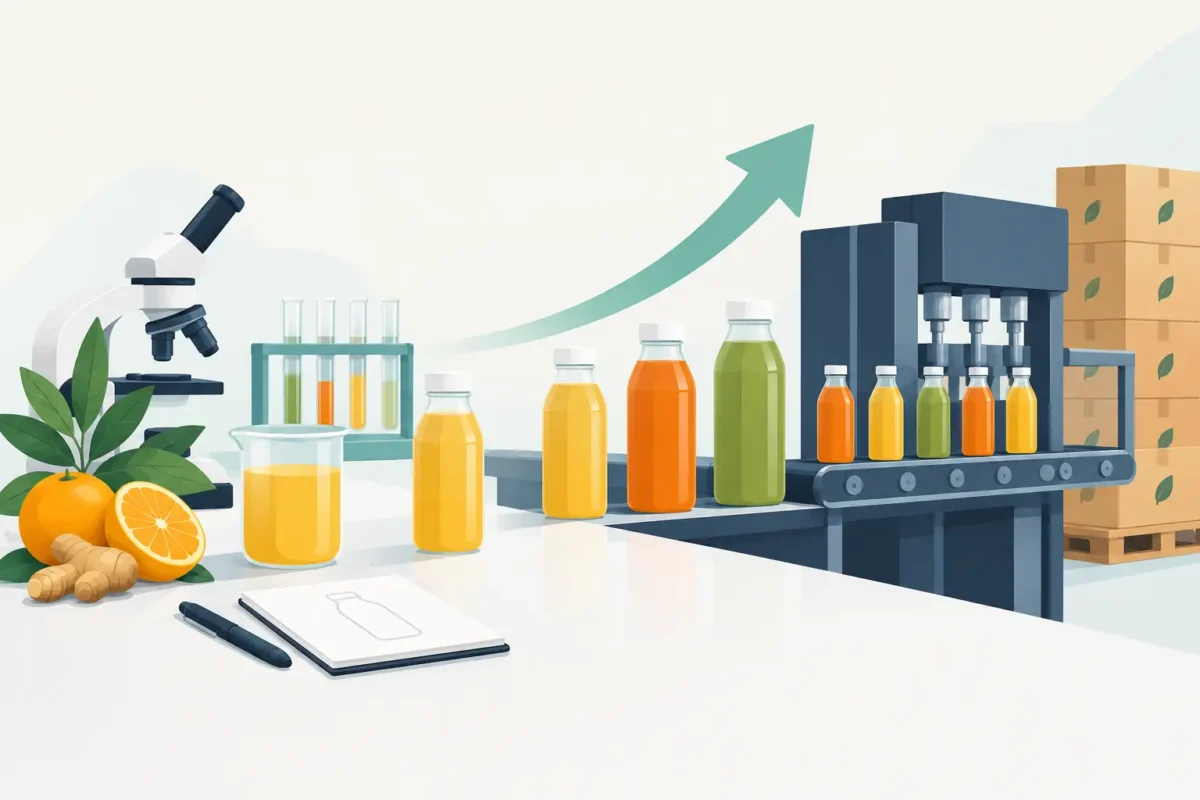
A great drinks idea is not a product until somebody can make it consistently, sell it profitably and buy it again. That is the hard truth behind beverage prototype creation. A kitchen sample that tastes exciting is a useful starting point, but it is not proof that the drink can survive manufacturing, meet legal requirements, earn margin or stand out on shelf.
For ambitious founders, the prototype stage is where the biggest decisions are made – often before a brand has spent serious money on packaging, stock or sales activity. Get it right and you build evidence for your proposition. Get it wrong and you can spend months polishing a product that was never commercially viable.
What beverage prototype creation is really for
Beverage prototype creation is the disciplined process of turning a concept into a testable liquid with a defined purpose. It brings together flavour, mouthfeel, functionality, ingredients, format, nutritional targets, shelf life, packaging and target price. It is not simply about making a drink taste nice.
A functional sparkling drink, for example, may need to deliver a meaningful active dose without bitterness, sediment or an off-note after carbonation. A protein shake may need to remain smooth through its shelf life rather than separating after a few weeks. A low-sugar adult soft drink has to earn its place against established brands while still giving consumers a reason to return.
The prototype should answer a commercial question: why will this product win with a specific customer, in a specific channel, at a specific price? Founders who treat formulation and commercial strategy as separate projects usually create unnecessary rework. The product, positioning and route to market need to be developed together.
Start with a brief that can withstand reality
Before ingredients are selected, define the non-negotiables. Who is buying the drink? What job is it doing for them? When will they consume it? Which brands will it sit beside, and what will make it the better choice?
A useful development brief is clear about the intended format, such as a still shot, canned sparkling drink, sachet, ready-to-drink bottle or concentrate. It states the desired sensory experience, health positioning, key active ingredients, allergens, dietary suitability, target shelf life and target retail price. It should also identify the first likely sales channel. A premium gym café, a national grocer and direct-to-consumer online sales each place different demands on pack size, price, margin and product performance.
This is where straight-talking advice matters. A founder may want plant-based, high protein, no added sugar, natural flavours, ambient shelf life and a low retail price. Those goals can conflict. Some are technically difficult; some are possible but expensive; others may dilute the proposition altogether. The right answer is not to promise everything. It is to prioritise what customers will genuinely value and what the business can deliver at scale.
Define the product promise before the flavour
Flavour is crucial, but it should support the product promise rather than lead it. A hydration drink needs a different taste profile from a calming evening beverage. A sharp citrus profile may suit an energy proposition, while a creamy indulgent profile could work better for a functional nutrition product.
Be specific. “A healthy drink for everyone” is not a product brief. “A lightly sparkling, low-sugar energy drink for busy professionals who want a credible alternative to traditional energy brands” gives development, design and sales teams something useful to work with.
Build prototypes in rounds, not in one big reveal
The strongest development programmes use controlled rounds of prototypes. Early samples explore broad sensory territory: sweetness level, acidity, flavour direction, texture, carbonation and colour. The aim is to identify the most promising route quickly, not to pretend the first sample is finished.
Once a direction is chosen, the next rounds need to solve the practical problems. Does the active ingredient change flavour over time? Does the sweetener leave a lingering aftertaste? Does the product become cloudy, settle or lose carbonation? Can it be processed safely? Can the ingredients be sourced consistently in realistic volumes?
Feedback must be structured. “I like it” is encouraging but not useful enough. Ask testers what they noticed first, whether the drink matched its promise, how it compares with alternatives and whether they would buy it at the intended price. Test with people who resemble your likely customer, not only friends who want to be supportive.
At this point, founders should resist the temptation to collect endless opinions. A prototype can be adjusted forever. Agree decision criteria at the outset, then make a call when the product meets them. Perfection is not the objective. A distinctive, repeatable product with a compelling reason to exist is.
The technical checks that protect your launch
A product can taste excellent on day one and still fail later. That is why beverage prototype creation must account for stability, safety and manufacturability from the start.
For ambient products, this can mean assessing pH, microbiological risk, preservative strategy, heat treatment and the impact of light or oxygen. For chilled products, the cold-chain requirement affects shelf life, distribution costs and where the product can realistically be sold. Carbonated drinks introduce further considerations around pressure, filling conditions and pack choice.
Functional ingredients demand particular care. Vitamins, botanicals, nootropics, electrolytes and minerals can interact with one another or degrade over time. A dosage that works in a bench sample may not stay effective through production and shelf life. The wording on pack also has to be legally supportable. If a claim cannot be substantiated and used compliantly, it should not be carrying the commercial proposition.
Packaging is part of the technical conversation, not a final design decision. A clear bottle may show off colour beautifully but expose sensitive ingredients to light. A slim can may suit the occasion and improve shelf appeal, but it changes filling options and cost. The right pack depends on the liquid, the channel, the target consumer and the economics.
Prototype for manufacturing, not just the laboratory
The move from small-batch sample to factory run is where many promising brands lose time and money. A recipe made with hand mixing and easily available ingredients may behave very differently on commercial equipment. Some ingredients need specialised handling. Others have minimum order quantities that are hard for an early-stage business to absorb.
Manufacturers will look at more than flavour. They need a formula that can be processed on their line, ingredients that can arrive reliably, a sensible production volume and a pack format they can fill. A brilliant drink with no realistic manufacturing route is not ready for market.
This does not mean founders must compromise every ambition. It means identifying the production route early enough to make intelligent trade-offs. Sometimes a slightly simpler formula creates a better first launch because it improves consistency, margin and speed. Sometimes a more complex formula is justified because the active system is the entire point of difference. It depends on what the customer is truly paying for.
A commercially informed partner can challenge the formula before expensive commitments are made, while also helping align suppliers, packaging and manufacturing requirements. That joined-up approach is what turns prototype work into a launch plan rather than an isolated R&D exercise.
Know when the prototype is ready
A market-ready prototype is not merely the founder’s favourite flavour. It has a clear product specification, an achievable ingredient and packaging plan, an appropriate stability and safety pathway, viable production assumptions and a proposition that can be explained in seconds.
It should also work financially. Calculate the likely cost of goods early, including ingredients, packaging, manufacturing, warehousing, freight, retailer or distributor margin, promotional spend and wastage. A drink can command a premium price, but only when its brand, format and consumer benefit make that price credible.
This is where Branding Innovations helps founders move with more confidence: connecting product development decisions to brand strategy, manufacturing reality and the route to market. The goal is not just to create a drink that can be made. It is to create one that buyers can understand and consumers will choose again.
Your first prototype does not have to carry the weight of a finished empire. It does need to prove that your idea can become a product with real commercial legs. Build it with that standard in mind, and every decision after it becomes sharper.