
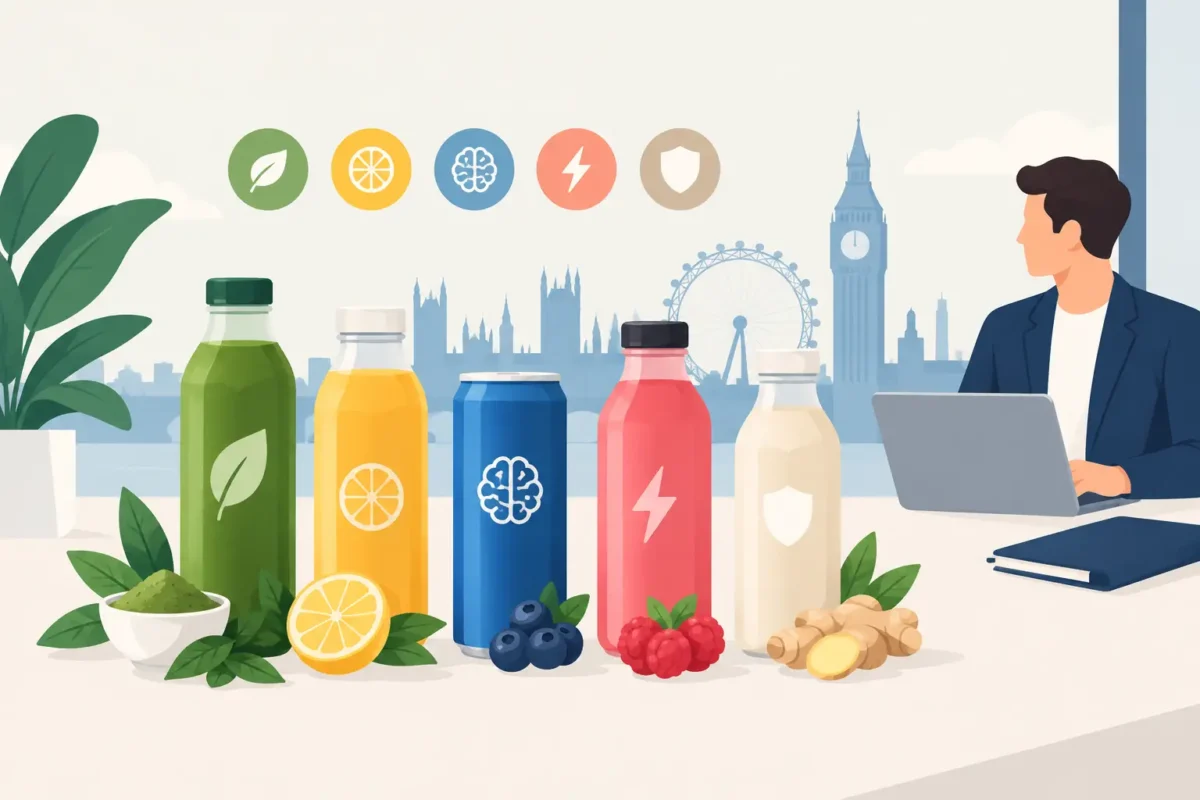
A buyer may only give your can or bottle a few seconds of attention. In that moment, your product needs to answer three questions: what does it do, why should they believe it, and will it taste good enough to buy again? That is why identifying the best functional drink categories is not about chasing the latest wellness buzzword. It is about finding a credible consumer need that your brand can own, formulate and sell profitably.
For ambitious founders, the opportunity remains significant. Consumers are actively looking for drinks that support energy, hydration, gut health, sleep, focus and everyday nutrition. But functional beverages are also one of the hardest FMCG spaces to enter. Claims are regulated, flavours can be challenging, ingredients can be expensive, and a great idea on paper can quickly become an unworkable product at scale.
The winners are not necessarily the brands with the longest ingredient lists. They are the brands with a clear job to do, a compelling reason to believe, and a product people genuinely enjoy drinking.
The best functional drink categories are built around real occasions
Before choosing a category, start with the drinking occasion. “Wellness” is too broad to build a commercial proposition around. People do not wake up asking for wellness. They want help getting through a 3pm slump, recovering after the gym, winding down after work or making a healthier choice in the meal deal chiller.
A functional drink earns its place when it fits naturally into an existing habit. That makes the proposition easier for consumers to understand and easier for buyers to range. It also gives you a sharper brief for formulation, pack design, pricing and route to market.
The categories below offer genuine potential, but each comes with trade-offs. The right choice depends on your target customer, price point, technical ambition and ability to create a distinctive brand rather than another me-too SKU.
1. Energy and focus drinks
Energy remains one of the largest and most commercially proven functional drink spaces. The category has moved well beyond traditional high-sugar energy drinks, creating room for cleaner-label options, lower-calorie formats and more considered functional positioning.
Caffeine is familiar, legally understood and easy for consumers to recognise. It also has a clear, immediate benefit, which is commercially powerful. The strongest opportunities tend to sit around better-tasting natural energy, nootropically positioned focus drinks, coffee alternatives and products designed for specific moments such as work, study, commuting or pre-training.
The challenge is differentiation. “Natural energy” alone is no longer enough. Founders need to be brutally honest: does the product deliver a noticeable benefit, does it taste better than established brands, and is there a visual world that makes someone reach for it in a crowded chiller?
Formulation needs careful handling too. High caffeine can create regulatory and labelling requirements, while botanical ingredients can add bitterness, sediment or instability. A premium functional story will fail if the liquid tastes medicinal.
2. Hydration and electrolyte drinks
Hydration has expanded from sports performance into daily wellbeing. Consumers now understand that electrolytes can have a role after exercise, travel, heat, illness and busy days when plain water feels uninspiring. This makes hydration one of the most accessible functional drink categories for a broad audience.
There are several possible routes: sport-led hydration, low-sugar daily electrolytes, hydration powders, ready-to-drink formats, family-focused products or premium adult refreshment. The most credible brands are specific about the occasion rather than claiming to serve everyone.
The commercial appeal is clear. Hydration is repeatable, easy to explain and compatible with multiple channels, from gyms and health retail to convenience and supermarkets. Yet the market is becoming crowded, especially around brightly branded electrolyte sachets and canned drinks.
Sugar, sodium and taste require a careful balancing act. Consumers often want low sugar, but a functional electrolyte profile can be difficult to make palatable without sweetness. A product also needs to be clear about whether it is designed for serious sport or everyday hydration. Trying to be both can leave a brand positioned nowhere.
3. Gut health and fibre drinks
Gut health has become a major consumer conversation, and drinks can make it easier to build prebiotics, fibre and fermented ingredients into daily routines. For founders, it is a category with substantial potential because the consumer need is persistent, not seasonal, and the format can support regular use.
Prebiotic sodas, fibre-enhanced soft drinks, kombucha-style beverages and cultured drinks all have a place here. The strongest proposition is usually one that makes gut health feel simple and enjoyable rather than clinical. Consumers may be motivated by digestion, but they still want a drink that feels like a treat.
This category demands technical discipline. Fibre can affect mouthfeel and clarity. Fermented products raise questions around shelf life, consistency and cold-chain requirements. Some ingredients may create digestive discomfort at higher doses, so formulation needs to be responsible as well as marketable.
There is also a messaging challenge. Gut health is a compelling platform, but health claims must be substantiated and compliant. Avoid vague promises that cannot be defended. Build the brand around transparent ingredients, a realistic serving format and a benefit consumers can understand without a nutrition degree.
4. Relaxation, sleep and mood drinks
The opposite of energy is not simply sleep. Consumers are increasingly interested in drinks that support calm, relaxation and a transition out of a busy day. This creates opportunities for alcohol alternatives, evening ritual products and mood-led soft drinks with a more sophisticated adult feel.
This category works best when it is tied to a believable ritual: after work, during a social occasion, before bed or as a replacement for an alcoholic drink. The product must give people something they feel they are gaining, not merely something they are giving up.
Botanicals, magnesium, L-theanine and carefully selected extracts can help shape the product story, but founders should not rely on ingredient theatre. Consumers are becoming more sceptical of labels packed with unfamiliar compounds. A calm drink that tastes elegant, looks premium and fits a genuine evening occasion will often outperform one making exaggerated promises.
Be especially careful with sleep positioning. The line between a gentle wind-down proposition and a claim that implies treatment can be commercially and legally significant. Experienced regulatory input at development stage is far cheaper than redesigning packaging after production.
5. Protein and nutrition-led drinks
Protein shakes are established, but the wider nutrition drink opportunity is still evolving. Consumers want convenient ways to increase protein, manage hunger or make a more substantial on-the-go choice. This is particularly relevant for busy professionals, active consumers and people seeking alternatives to traditional breakfast or snack occasions.
The opportunity extends beyond gym culture. Clear protein waters, premium iced coffees, dairy-free nutrition shakes and meal-support drinks can all work if the audience is defined properly. The key is not to assume that more protein automatically creates a better brand. The product needs a compelling reason to exist in its chosen channel and format.
Taste and texture are decisive. Plant proteins can bring chalkiness and off-notes, while high-protein formulations can create processing and stability challenges. Cost can also become an issue quickly, particularly when founders combine premium proteins, no added sugar and a ready-to-drink format.
If your target retail price cannot support the ingredient bill, packaging, margin structure and promotional spend, the concept is not commercially ready. A sensible formulation brief starts with the intended shelf price, not just the dream ingredient deck.
6. Immunity and everyday defence drinks
Immunity remains attractive because it is easy for consumers to understand and naturally linked to everyday health. Vitamin-led shots, fortified juices, botanical blends and functional teas can all occupy this space. However, it is a category where vague claims and familiar formulations are everywhere.
To stand out, founders need more than vitamin C and a bright orange label. Consider whether the real proposition is immunity, daily vitamins, seasonal wellness, travel support or a convenient nutritional top-up. These are related but commercially different occasions.
Shots can be a strong entry point because they feel concentrated and purposeful, but they also create challenges around repeat purchase, pricing and flavour intensity. A harsh shot may signal potency once, but it does not necessarily build loyalty. Ready-to-drink formats can broaden the audience, though they need stronger reasons to command shelf space.
How to choose the right category for your brand
The best category is not always the fastest-growing one. It is the one where your brand has a credible point of difference and a realistic path to launch. Start by pressure-testing the opportunity against the questions that matter commercially:
- Is there a clear consumer occasion that supports repeat purchase?
- Can the functional benefit be communicated simply and compliantly?
- Can you create a great-tasting product at the required cost?
- Is there room for a distinctive brand, not just another flavour?
- Can your chosen format survive manufacturing, distribution and retail margins?
These questions sound basic, but they eliminate a remarkable number of expensive mistakes. A founder may have a brilliant ingredient concept but no scalable supply chain. Another may have a beautiful brand but a product that cannot meet its target price. The commercial work and creative work have to move together.
At Branding Innovations, we see the strongest concepts emerge when founders test the proposition early, formulate for taste and manufacturability, and build a brand story buyers can understand quickly. A functional drink is not finished when the recipe tastes good in a sample bottle. It is finished when the proposition, pack, margin, production plan and route to market all work as one.
Build for the second purchase, not the launch post
The functional beverage market rewards ambition, but it punishes shortcuts. Choose a category with a clear consumer problem, then make sure your product solves it in a format people want to buy again next week. The most exciting launch is not the one that gets attention for a day. It is the one that earns a permanent place in the fridge.