
An Alcohol Beverage Development Case Study That Started Before Its Time
This alcohol beverage development case study tells the story of Ibiza Ice a brand Richard Horwell conceived, developed, and launched long before the RTD revolution arrived. It is a story of genuine innovation, hard commercial lessons, and a product that was years ahead of what the market was ready to accept.
It is also one of the most honest and instructive brand journeys you will read. Because Ibiza Ice did not follow a perfect path. It encountered the real obstacles that face every first-time drink brand founder packaging limitations, market timing challenges, distribution barriers, and the brutal economics of early-stage production. Understanding those obstacles, and how they were navigated, is exactly what makes this case study valuable.
The UK flavored alcoholic beverages market is estimated at £6.5–7.5 billion in retail value in 2026, growing at 8–10% CAGR since 2021 driven by premiumization, new product development, and channel expansion. Ibiza Ice was in this market before the market had a name for what it was doing. Looking back from 2026, the insight behind the brand was entirely correct. The execution required the kind of learning that only comes from going through the process.
At Branding Innovations, we have launched over 200 drink brands worldwide. Richard Horwell’s personal brand journey with Ibiza Ice and the lessons it produced sits at the foundation of everything we do for clients today.
The Original Idea: What Was Ibiza Ice?
The name of this brainchild was called Ibiza Ice. Richard had always been fond of the island of Ibiza, spending many summers there, and wanted to attract the type of party crowd that frequented or dreamed of frequenting the sunny isle. He wanted an innovative product that appealed to a young, fun, and premium market providing the lifestyle they lived, encapsulated within a bottle.
The concept was built around a genuine market observation. The idea first came as Richard explored the alcohol market and saw the demise of the alcopop and the emergence of wine. He identified a perfect opportunity for alcohol beverage development taking wine and adding flavors to make it more consumer-friendly.
This was a strategically intelligent insight. The alcopop category had collapsed under the weight of its own sugar content, negative health perception, and association with teenage binge drinking. Wine was growing but wine in its traditional form was not accessible, portable, or approachable enough for the young, active consumer Richard was targeting.
A flavored, low-calorie, natural wine-based RTD positioned around the Ibiza lifestyle filled that gap. In concept, it was exactly right. The execution, however, faced every obstacle the market could throw at it.
The First Version: Glass Bottles and Lessons Learned
Initially, Ibiza Ice was in a glass bottle. Sadly, it looked much like any other alcopop for small production runs, there was little or no choice on the packaging of alcoholic beverages. It was glass or nothing. Like many new start-ups, Richard wanted Ibiza Ice to be different from the mass.
The glass bottle was not a brand choice it was a production reality. At small volumes, co-packers offer limited packaging flexibility. Glass was the accessible option. But it created immediate commercial problems.
Glass is heavy. Wholesalers dislike it because cases are difficult to handle and breakages are costly. It does not perform well in e-commerce a channel that was already growing rapidly. And visually, a glass bottle in the RTD category reads as a conventional alcopop the exact positioning Ibiza Ice was trying to escape.
This is a lesson every new drink brand founder must absorb early: your packaging format is as much a strategic and commercial decision as it is a design one. The constraints of early-stage production can force packaging choices that actively work against your brand positioning. Planning for packaging evolution from initial small-run formats to premium commercial formats must be part of the brand roadmap from day one.
The Recipe Philosophy: Natural, Low-Calorie, Ahead of Its Time
The recipe philosophy behind Ibiza Ice was remarkably prescient. When Richard did the drink recipe development for Ibiza Ice, it had to be all natural and low in calories. This is very much the message of the Hard Seltzer category as consumers now realize there is a great deal of unnecessary content in alcoholic drinks. Currently, manufacturers do not have to declare ingredients in alcoholic drinks. But times are changing and consumers are starting to look for products like Ibiza Ice to fill this demand.
In 2026, this observation has become mainstream market reality. Low-calorie and natural-flavor formulations represent the fastest-expanding product tier in the UK flavored alcoholic beverages market with hard seltzers and spirit-based RTDs accounting for over 55% of volume growth.
Ibiza Ice was building around these values before the consumer conversation had caught up. The product formula was clean. The calorie count was deliberately low. The ingredients were natural. When Ibiza Ice was relaunched as a sparkling fruit wine cocktail in lychee, lime and melon, and pomegranate variants it was positioned as a healthier alternative to flavored cider and wine, with each drink containing 60 calories or fewer per 100ml, and all ingredients declared on the bottle to ensure transparency.
Ingredient transparency was a bold move at a time when most alcoholic drink brands were declaring nothing. Ibiza Ice treated its consumers as adults who deserved to know what was in their drink. In 2026, that transparency is increasingly an expectation rather than a differentiator. The brand was simply early.
The Relaunch: A New Format and a Clearer Proposition
The original glass bottle version of Ibiza Ice was a learning exercise. The relaunch brought a fundamentally different product a sparkling fruit wine cocktail, repositioned with greater clarity and a stronger consumer-facing proposition.
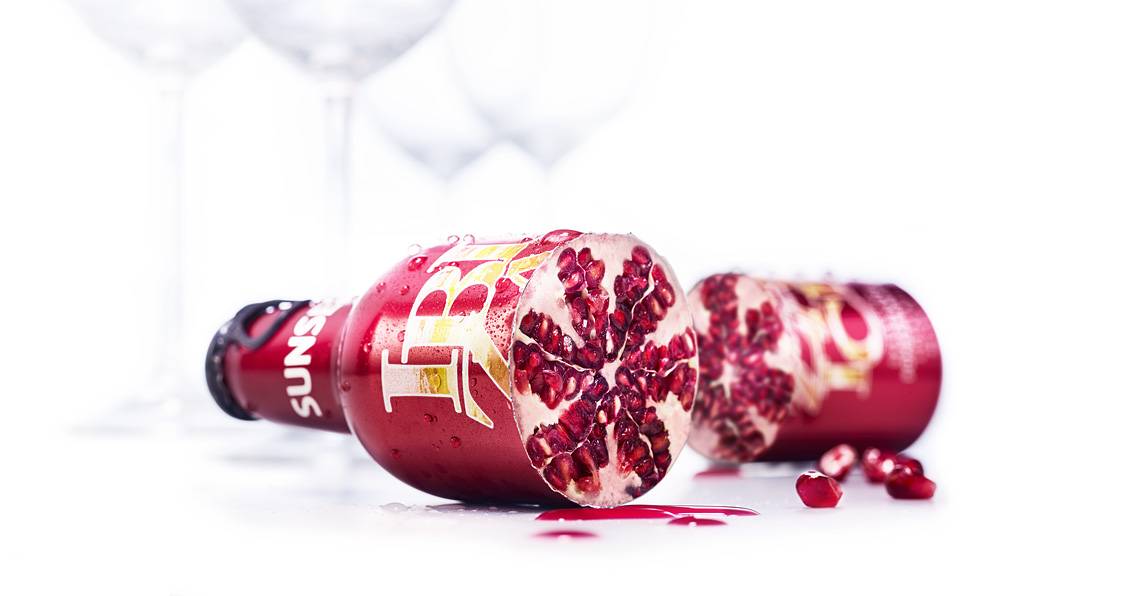
The overhauled Ibiza Ice featured a new recipe and look, coming in lychee, lime and melon (White Isle) alongside a pomegranate-flavored Sunset variant, at an RSP of £1.99–£2.49 per 330ml.
The two variants were carefully chosen to reflect the brand’s Ibiza positioning:
White Isle — lychee, lime, and melon. Light, tropical, summery. The flavor profile of a Sunday afternoon at a beach club. Refreshing and approachable.
Sunset — pomegranate. Rich, vibrant, and visually striking. The colour of an Ibiza evening. More complex, more sophisticated, and immediately distinctive on shelf.
Both variants were formulated to deliver under 60 calories per 100ml keeping them competitive with the emerging hard seltzer category that was beginning to gain traction globally.
The relaunch also addressed the ingredient transparency position more directly. Every ingredient was declared on the label a practice that was genuinely unusual in the alcoholic drinks category at the time and one that positioned Ibiza Ice clearly in the growing health-conscious alcohol space.
What the Ibiza Ice Story Tells Us About the RTD Market in 2026
Looking back at Ibiza Ice from the vantage point of 2026, the commercial intelligence behind the concept is striking. The product positioned itself in a category low-calorie, natural, flavored, portable RTD alcohol that has since become one of the most commercially powerful in the entire UK drinks market.
The UK RTD alcoholic beverages market is expected to grow from $1.75 billion in 2024 to $3.67 billion by 2035, at a CAGR of nearly 7% driven by hard seltzers, bottled cocktails, and premiumized flavored alcohol.
The global pre-mixed RTD alcoholic drink market is valued at $39.1 billion in 2026 and is forecast to reach $63.0 billion by 2036, advancing at a 5% CAGR.
Ibiza Ice was in this space before these numbers existed. The brand proved the concept was sound. The market simply needed time to catch up and the consumer behavior, regulatory environment, and production capabilities needed to mature alongside it.
Growth in the RTD category has far outstripped other alcohol segments, with UK canned alcoholic beverages expected to hit $1.365 billion by 2030 at an exceptional CAGR of 36%.
The RTD Market Landscape in 2026: Where Ibiza Ice Would Sit Today
Understanding the current RTD market helps illustrate both how far the category has come and where a brand like Ibiza Ice would sit if launched today.
| RTD Sub-Category | UK Market Value 2026 | Key Consumer | Growth Trajectory |
| Spirit-based RTDs | 35–40% of total market | Premium adults 25–45 | Strong, premiumising |
| Hard Seltzers | 25–30% of total market | Health-conscious millennials | Above-category growth |
| Flavored malt beverages | 15–20% of total market | Younger adults 18–30 | Stable |
| Wine-based coolers/spritzers | 10–15% of total market | Female consumers 25–40 | Recovering, premiumising |
| Hard kombucha/hard tea | 5–8% of total market | Wellness-focused adults | Fastest-growing new segment |
Ibiza Ice a wine-based, low-calorie, natural flavor RTD sits squarely in the wine-based coolers and spritzers segment. This segment is currently recovering and premiumizing. Canned wine has seen a shift in quality and premiumization, with Mintel data showing canned wine from a favorite brand appeals to 40% of drinkers or 61% of 18 to 34-year-olds primarily because the format helps them to moderate.
In 2026, the natural home for Ibiza Ice would be a premium can format 250ml or 330ml positioned in the wine-based cooler and premium RTD segment. The brand’s clean ingredient story, low calorie count, and lifestyle positioning would be strengths rather than novelties in today’s market.
What Richard Learned: The First-Time Founder’s Real Education
Richard Horwell has always been candid about what Ibiza Ice taught him. He is honest that this was his first venture into drink product development and like most budding entrepreneurs, he had a mass of ideas but not the connections or knowledge to make them happen.
This honesty is the most important part of this alcohol beverage development case study. Because the lessons Richard learned through Ibiza Ice directly shaped the approach he brings to every client at Branding Innovations today.
Here are the specific lessons and how they translate into actionable guidance for brand founders in 2026.
Lesson 1 — Connections and Knowledge Are as Valuable as the Idea
A genuinely good drink concept is necessary but not sufficient. The drinks industry operates on relationships. Co-packer relationships. Buyer relationships. Supplier relationships. Distributor relationships. Press relationships.
Without these connections, even the best product struggles to find its market. With them, a good product can achieve distribution, listings, and consumer awareness that would otherwise take years to build independently.
This is why working with an experienced drink development partner one with established industry relationships dramatically accelerates the brand journey and reduces the risk of costly, time-consuming dead ends.
Lesson 2 — Packaging Format Must Be a Strategic Decision
The glass bottle constraint that shaped Ibiza Ice’s first version is a warning every new brand founder needs to hear. At small production volumes, packaging options are limited. But packaging choices have enormous commercial consequences for buyer acceptance, logistics costs, e-commerce performance, and shelf impact.
Import dependence is significant in the UK flavored alcohol market, with approximately 35–40% of finished flavored alcoholic beverages sourced from EU co-packers particularly for wine-based coolers and premium spirit RTDs. Understanding the full production and packaging landscape before committing to a format is essential.
Plan your packaging evolution from the start. Know what format you want to reach and what production volume milestone unlocks it. Build that roadmap into your brand strategy from day one.
Lesson 3 — The Recipe Must Be Built for Commercial Reality, Not Kitchen Success
Ibiza Ice’s recipe was developed with the right philosophy natural, low-calorie, ingredient-transparent. But translating any recipe from concept to commercial production requires technical expertise that goes far beyond kitchen development.
pH stability. Shelf life. Heat treatment behavior. Ingredient interaction at scale. Carbonation retention. These are technical disciplines not intuitions. A recipe that tastes perfect in a small batch may behave entirely differently in a 5,000-litre production run.
Our recipe development process led by a developer with over 40 years of commercial formulation experience ensures every recipe we develop is commercially viable before it ever reaches a co-packer. This protects your investment and your launch timeline.
Lesson 4 — Market Timing Matters but Early Is Better Than Late
Looking retrospectively, it is clear that Ibiza Ice was ahead of its time since a massive upsurge in the RTD market with hard seltzers has flooded into the market.
Being early to a category is not a failure. Ibiza Ice demonstrated genuine consumer demand for low-calorie, natural, lifestyle-positioned RTD alcohol. The market infrastructure co-packer capability, retail category development, consumer awareness simply needed time to mature.
In 2026, the RTD and flavored alcohol category is fully mature. Being early now means entering before the premium end of the market becomes dominated by major spirits companies. IWSR identifies RTDs as one of six key drivers shaping beverage alcohol in 2026 and beyond particularly through premiumisation, Gen Z recruitment, and innovation-led growth. The opportunity exists right now. But it will not stay this accessible indefinitely.
Lesson 5 — Transparency and Natural Credentials Were Right Then and Are Essential Now
Ibiza Ice declared every ingredient on the label at a time when no alcoholic drink brand was doing this. It was ahead of the regulatory curve and ahead of the consumer conversation. In 2026, ingredient transparency in alcohol is becoming a genuine expectation.
Gen Z is redefining its relationship with alcohol becoming more selective while balancing moderation with discovery, with a strong focus on intentionality, moderation, and value-driven choices.
This consumer is exactly the audience Ibiza Ice was designed for. They want to know what’s in their drink, choose natural ingredients, and prefer a lower calorie count. And they want a brand that reflects their values not just their desire for intoxication.
A brand built on those foundations in 2026 is building on solid, durable commercial ground.
The Current RTD Opportunity: What Ibiza Ice Shows Founders Today
This alcohol beverage development case study is not just a historical record. It is a lens through which to understand the RTD opportunity that exists in the UK market right now.
RTDs grew retail volume sales rapidly in 2025, benefiting from people cutting back on out-of-home socializing, aided by strong NPD activity and warm summer weather. Targeting at-home social occasions remains important for brands in 2026 given weak real income growth with 57% of category drinkers buying vodka, gin, or RTDs for an at-home gathering in the second half of 2025.
The at-home social occasion is the primary commercial opportunity for new RTD brands right now. Consumers are drinking at home more than ever. They want something that feels special not just a can of beer or a glass of wine. A beautifully branded, naturally formulated, low-calorie flavored RTD fills this occasion perfectly.
Flavor wins: 56% of consumers say exciting blends influence their purchase slightly ahead of classic flavors at 45% showing demand for both innovation and familiarity simultaneously.
For more insight into the flavor innovation opportunities in the RTD space, see our article on innovative flavor trends.
How to Build a Successful Flavored Alcohol RTD Brand in 2026
Drawing directly from the Ibiza Ice experience and our broader portfolio of 200+ brand launches, here is the framework for building a successful flavored alcohol RTD brand today.
Define Your Occasion First
RTD brands win or lose on occasion relevance. Define exactly when, where, and why your target consumer reaches for your product. Is it a Friday evening at home with friends? A music festival? A beach day? A work event? The occasion defines your format, your flavor profile, your packaging, and your retail channel strategy.
Choose Your Base and ABV Deliberately
Spirit-based RTDs are outperforming other bases. Globally, spirit-based RTD volumes have grown while wine- and malt-based RTDs have declined. In many markets, spirit-based RTDs command a premium of up to 25% over malt-based alternatives.
Wine-based RTDs like Ibiza Ice occupy a distinct and growing niche particularly for female consumers and the moderation-focused audience. Spirit-based RTDs lead on premium perception. Malt-based formats support lower price points. Your base choice must align with your consumer and your commercial ambition.
Build Your Recipe Around Natural and Low-Calorie Credentials
In 2026, the clean-label RTD opportunity is clearer than ever. Brands combining trending flavor profiles with natural, calorie-free sweeteners are onto a significant commercial opportunity as low-and-no-calorie drink sales continue to grow and consumers increasingly seek natural options over those with chemical additives.
Natural sweeteners monk fruit, stevia, erythritol allow brands to deliver genuine sweetness at low or zero calories without artificial compounds. See our full guide to natural flavors without artificial sweeteners for detailed formulation guidance.
Choose Can Format for Commercial Viability
The can is the dominant format in the RTD category in 2026. It is lighter than glass, easier to transport, more shelf-stable, and performs significantly better in e-commerce. Home consumption accounts for 81% of pre-mixed alcoholic beverage consumption making the can’s portability, convenience, and storage benefits essential commercial attributes.
For new brands, starting with blank can filling at lower minimum order quantities and then transitioning to branded printed cans at scale is the most commercially sensible manufacturing pathway.
Navigate Alcohol Duty Reform
The UK’s 2024 alcohol duty reforms changed the pricing structure for RTD products significantly. Regulatory changes including the 2024 alcohol duty reforms have shifted pricing structures, favouring lower-ABV flavored products and compressing margins for higher-strength RTDs.
Products formulated at lower ABV typically 3.5–4.5% benefit from lower duty rates. This creates a genuine formulation incentive toward the lighter alcohol positioning that also aligns with consumer health preferences. For alcohol compliance and duty planning, the HMRC alcohol duty guidance is the definitive UK reference.
Build Your Launch Strategy Around Retail and DTC Together
Off-premise retail channels account for 55–60% of volume, while e-commerce and direct-to-consumer channels represent 10–15% of sales and are the fastest-growing distribution route, expanding at 12–15% annually.
A new RTD brand in 2026 should pursue retail listings and DTC simultaneously. Retail provides volume and credibility. DTC provides margin, consumer data, and the ability to tell your brand story in depth. Amazon is a critical channel particularly for innovative flavor RTDs targeting health-conscious consumers.
Our launch service provides direct access to over 6,500 UK buyers across supermarkets, convenience, health and wellness retailers, hospitality, and online platforms. We know which buyers are actively building their RTD ranges and which will respond to a clean-label, low-calorie flavored alcohol proposition.
Alcohol Beverage Development: Key Decision Framework
| Decision Point | Options | Our Recommendation for 2026 |
| Alcohol base | Wine, spirit, malt | Spirit-based for premium; wine-based for moderation-focused |
| ABV level | 0.5–4%, 4–6%, 6%+ | 3.5–4.5% duty advantage and health alignment |
| Calorie target | Full calorie, low cal, ultra-low | Under 70 calories per 100ml — aligns with hard seltzer benchmark |
| Sweetener | Sugar, artificial, natural | Natural only — monk fruit/stevia blend |
| Format | Glass, PET, can | Aluminium can — best commercial performance |
| Flavor profile | Classic, exotic, botanical | Exotic or botanical — highest consumer engagement |
| Ingredient transparency | Partial, full | Full declaration — consumer trust and brand differentiation |
| Launch channel | Retail-first, DTC-first, both | Both simultaneously — retail credibility + DTC margin |
Expert Insight: What This Case Study Teaches Every Founder
This alcohol beverage development case study is Richard Horwell’s most personal contribution to the knowledge base at Branding Innovations. He built Ibiza Ice before he had the industry connections, production relationships, and market understanding that he has today.
The brand was right in concept. It was early in market timing. And it required the kind of hard commercial education that only comes from going through the process.
What Richard learned through Ibiza Ice directly shaped the support system he built for Branding Innovations clients. The co-packer relationships that took years to build. The understanding of what buyers actually need to see before they list a product. The recipe development discipline that ensures commercial viability before any investment in production. The brand positioning rigour that creates genuine shelf differentiation.
Every founder who works with Branding Innovations today benefits from those hard-won lessons — without having to repeat them.
FAQs: Alcohol Beverage Development Case Study
Q: What is the most important lesson from the Ibiza Ice alcohol beverage development case study?
The single most important lesson is that industry connections and knowledge matter as much as the product idea. A great concept without the right co-packer relationships, buyer access, and production expertise will struggle regardless of its commercial merit. Working with an experienced development partner from the start eliminates years of costly trial and error.
Q: Was Ibiza Ice ultimately successful as an RTD brand?
Ibiza Ice was ahead of its time positioned in a category that the UK market has since fully validated. It demonstrated genuine consumer demand for low-calorie, natural, lifestyle-positioned RTD alcohol and was featured in The Grocer as a “completely new proposition.” The commercial infrastructure and consumer awareness for that category simply needed time to develop. The concept proved correct; the timing was early.
Q: What packaging format should a new RTD alcohol brand use in 2026?
Aluminium cans are the definitive recommendation for 2026. They offer the best shelf life, the best transport economics, the strongest e-commerce performance, and increasing premium positioning. Glass creates logistics challenges and buyer resistance. PET carries sustainability stigma. Cans deliver on every commercial dimension for new RTD brands.
Q: How is the UK RTD alcohol market performing in 2026?
The UK flavored alcoholic beverages market is valued at £6.5–7.5 billion in 2026, growing at 8–10% CAGR since 2021. Hard seltzers and spirit-based RTDs account for over 55% of volume growth. Low-calorie and natural-flavor formulations are the fastest-expanding product tier. The category is one of the most commercially active in the entire UK drinks market.
Q: How do I avoid the mistakes Richard made with Ibiza Ice when launching my own RTD brand?
The three critical protections are: work with an experienced drink development partner who has established industry connections; resolve your packaging format strategy before approaching any co-packer; and build your recipe with commercial viability stability, scalability, and regulatory compliance as the primary objectives from the start.
Q: What makes a low-calorie flavored RTD commercially viable in 2026?
A commercially viable low-calorie flavored RTD in 2026 combines a clean natural sweetener blend delivering genuine sweetness without artificial compounds, a calorie count under 70 per 100ml, full ingredient transparency, a distinctive flavor profile built around trending botanical or exotic profiles, and an aluminum can format with premium brand design. The Ibiza Ice philosophy natural, low-calorie, transparent maps precisely onto these requirements.
Final Thoughts: Ibiza Ice Was the Education That Built Branding Innovations
The Ibiza Ice alcohol beverage development case study is more than a brand story. It is the origin of the expertise that Branding Innovations brings to every client engagement today.
Richard Horwell built Ibiza Ice without the connections, the production knowledge, or the market intelligence that he now offers as standard. The brand was right. The timing was early. And the experience was the most valuable education in the drinks industry that money could not have bought.
Every lesson from that journey about packaging constraints, recipe commercialization, co-packer relationships, buyer expectations, and market timing sits embedded in the development process we apply to every brand we build.
Rather than rejecting beverage alcohol, Gen Z is redefining its relationship with it becoming more selective while balancing moderation with discovery, with a strong focus on intentionality, moderation, and value-driven choices. Ibiza Ice understood this consumer before they were identifiable as a demographic. In 2026, that consumer is the primary growth driver for the entire RTD category.
If you are developing a flavored alcohol RTD brand and want to benefit from the hard-won experience behind this case study without repeating the costly mistakes speak to our team today. We offer a free initial consultation and bring nearly two decades of UK drink brand development expertise to every conversation.
Read our Book for Guidance
Branding Innovations is the UK’s leading specialist in drink development, branding, and product launch. Richard Horwell has over 35 years of FMCG experience and has personally developed and launched over 200 brands worldwide.
For further reading, explore our related articles on how to get a drink manufactured, natural flavors without artificial sweeteners, innovative flavor trends, and functional mocktails and adult soft drinks.