
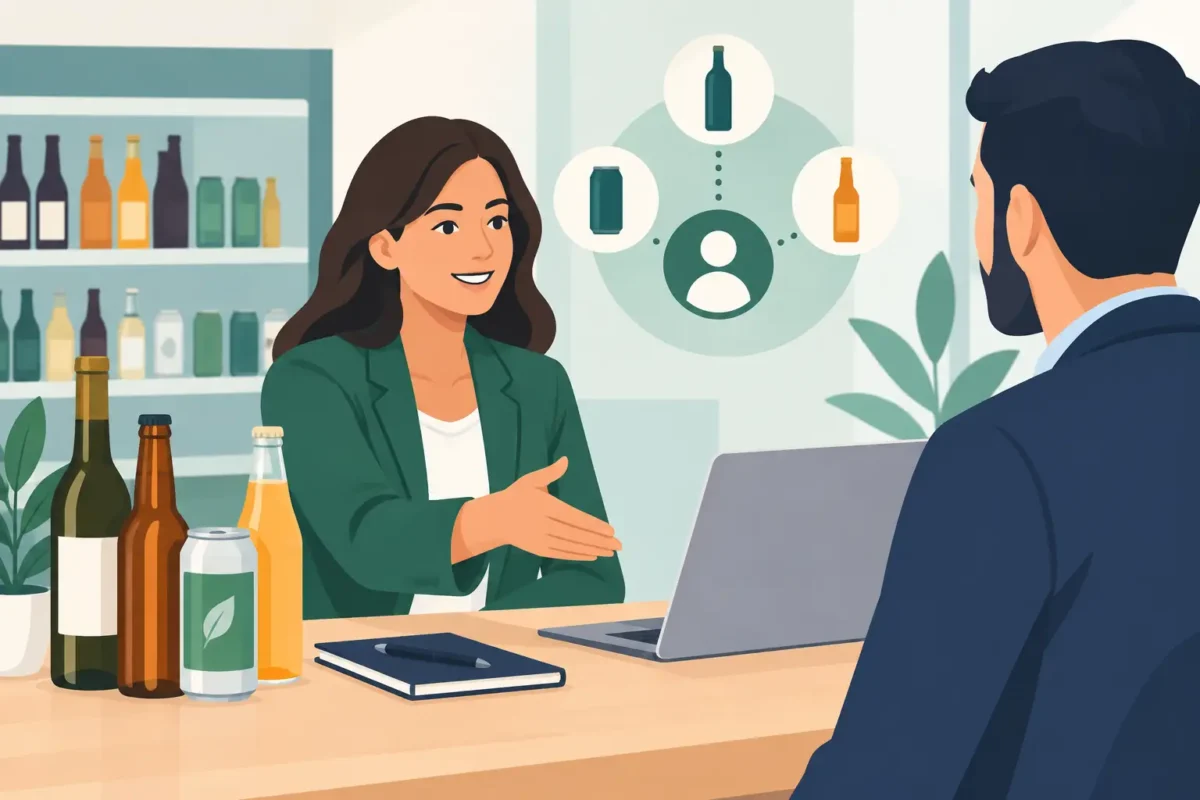
A guide to beverage buyer outreach is not about firing off hundreds of emails and hoping a retailer replies. It is about proving that your drink belongs on their shelf, solves a genuine customer need and can be supplied without creating a headache for their team. Buyers are time-poor, commercially accountable and pitched constantly. Your job is to make the decision to take a meeting feel low-risk and worthwhile.
For an early-stage beverage founder, this is where a strong idea meets the commercial reality of FMCG. A great flavour, clever name or attractive can may earn attention. It will not, on its own, win distribution. The brands that progress are prepared, specific about where they fit and realistic about what happens after a buyer says yes.
Start buyer outreach when the business is ready
There is a temptation to contact major retailers as soon as the first production sample looks good. Usually, that is too early. An enthusiastic buyer conversation can quickly go cold if you cannot answer basic questions on pricing, shelf life, minimum order quantities, product certifications, production capacity or delivery.
Before outreach, be clear on your launch-ready proposition. That means a product with a repeatable recipe, stable packaging specification, compliant label copy and a manufacturing route that can scale beyond a small first run. It also means knowing your numbers. If you do not understand your landed cost, trade price, recommended retail price, promotional allowance and target margin, you are not ready to negotiate.
This does not mean every detail must be perfect before you speak to anyone. Some founders benefit from early conversations with distributors, independents or foodservice operators to test demand and learn how the category works. The difference is being honest about your stage. Do not present a development-stage drink as a nationally supply-ready brand.
Build the case before you ask for a meeting
A buyer is not buying your personal story, however compelling it may be. They are buying a commercial opportunity. Your outreach needs to show why the product earns its place against established brands, private label and the dozens of other launches competing for a limited number of listings.
Start by defining the customer, occasion and category gap in plain language. “A functional wellness drink for everyone” is too broad to be useful. “A low-sugar sparkling drink designed for afternoon energy, without caffeine” gives a buyer something they can assess. Be able to explain whether you are winning through flavour, function, format, price point, cultural relevance or a clear underserved audience. Ideally, it is one primary reason supported by others, rather than six vague claims.
Evidence strengthens this story. That might be credible market research, a well-run sampling programme, online repeat purchase, independent retail sell-through, hospitality accounts or feedback from a tightly defined target audience. Early traction matters, but quality matters more than vanity. A small number of stores reordering is often more persuasive than a large social following with no evidence that people buy the product again.
Your buyer pack should make the commercial proposition easy to evaluate. At minimum, prepare a concise brand deck, a product specification sheet, current price architecture, product imagery, case configuration and a clear account of manufacturing capacity and lead times. Include any relevant accreditation, nutrition information and substantiation for functional claims. In drinks, loose claims can create compliance issues and damage trust fast.
Target the right route to market first
Not every promising drink should begin by chasing a national supermarket listing. The right route depends on the product, the price point, the operational capability and the speed at which you need market learning.
Premium functional shots may gain useful credibility through gyms, wellness studios, cafés and specialist independents. An impulse-led sparkling can may need high-footfall convenience, travel or foodservice environments. A multipack family proposition may be a stronger fit for grocery, but grocery brings tighter margins, greater volumes and more demanding supply expectations.
Build a target list in tiers. Start with accounts where the product has a logical reason to exist, then identify the buyer or category manager responsible for that segment. A generic inbox is rarely the best route, although it can be appropriate for smaller wholesale businesses. Be precise about the category you belong in. A buyer for soft drinks may not handle chilled juice, health products or alcohol alternatives.
Distributors and wholesalers can be valuable partners, particularly when you need access to fragmented independent accounts. They are not a shortcut around commercial fundamentals. They will still look at margin, rate of sale, product handling, case sizes, promotional support and whether you can create demand. If the brand is unknown, expect to invest time and budget in making it move.
Write outreach that respects a buyer’s time
The first message should be short, relevant and based on a reason for contacting that particular person. Do not send a long brand autobiography or attach a twenty-page deck without context. Give the buyer enough information to decide whether a conversation is worth having.
A strong email introduces the drink in one sentence, identifies the customer or gap it serves, offers one or two proof points and makes a simple request. For example, you might reference success in premium independents, a strong repeat-order rate or a proposition that complements a retailer’s existing health and wellbeing range. Then ask whether they would be open to reviewing a sample and a short commercial overview.
Personalisation should be genuine. Mentioning a recent range review, store format or relevant brand in their portfolio can demonstrate category awareness. Empty flattery does not. Neither does pretending your product is right for every retailer. A buyer will respect a founder who understands that the fit may not be there yet.
Follow up professionally. Buyers miss emails. One thoughtful follow-up after around a week, and a final concise nudge later, is reasonable. Repeated chasing without fresh information becomes noise. If you have new sales data, a major account win, a reformulation improvement or a relevant campaign result, that gives you a valid reason to reconnect.
Make the buyer meeting commercially useful
If you secure the meeting, do not spend the first twenty minutes explaining how much you love the brand. Bring samples, but lead with the commercial story. What does the product do for their customer? Where will it sit? What will it retail at? Which comparable products demonstrate the occasion? Why will people buy it again?
Expect direct questions. Can you supply 200 stores? What happens if demand doubles? What is the shelf life on delivery? Can the outer case survive distribution? What promotion are you funding? What margin is available? The right answer is not always an immediate yes. If you need to confirm something with your manufacturer or logistics partner, say so, then return quickly with a precise answer.
Sampling is your chance to let taste prove the proposition. For functional beverages especially, founders can become so focused on ingredients that they overlook enjoyment. Buyers know customers will not build a habit around a drink that tastes medicinal, no matter how impressive the formulation appears on pack.
Be prepared to discuss a phased launch. A regional trial, selected store group or focused channel launch may give both sides valuable evidence before a wider rollout. It can feel less glamorous than a national listing, but it is often the smarter way to protect cash, prove rate of sale and refine your activation plan.
Treat the listing as the start, not the finish
A purchase order is a milestone, not a guarantee of growth. Once listed, your priority becomes making the product move. That requires a clear activation plan covering sampling, retailer support, social content, field sales where appropriate and reliable stock availability. A listing that underperforms can be difficult to win back.
Track the numbers closely: store-level sales where available, reorder frequency, promotional uplift, returns, out-of-stocks and customer feedback. Use that data to improve the next buyer conversation. If one flavour drives repeat purchase and another stalls, act on it. Founders who defend every original decision often waste money. Founders who learn quickly build stronger businesses.
At Branding Innovations, we see the biggest difference when founders treat buyer outreach as part of the product-development process, not a last-minute sales task. The route to market should influence format, pack, price, manufacturing decisions and launch budget from the beginning.
The best buyer outreach is confident without being inflated. Know your product, know the category, know what you can deliver and be ready to prove it. That is how an ambitious beverage idea becomes a brand buyers can back – and customers come back for.