
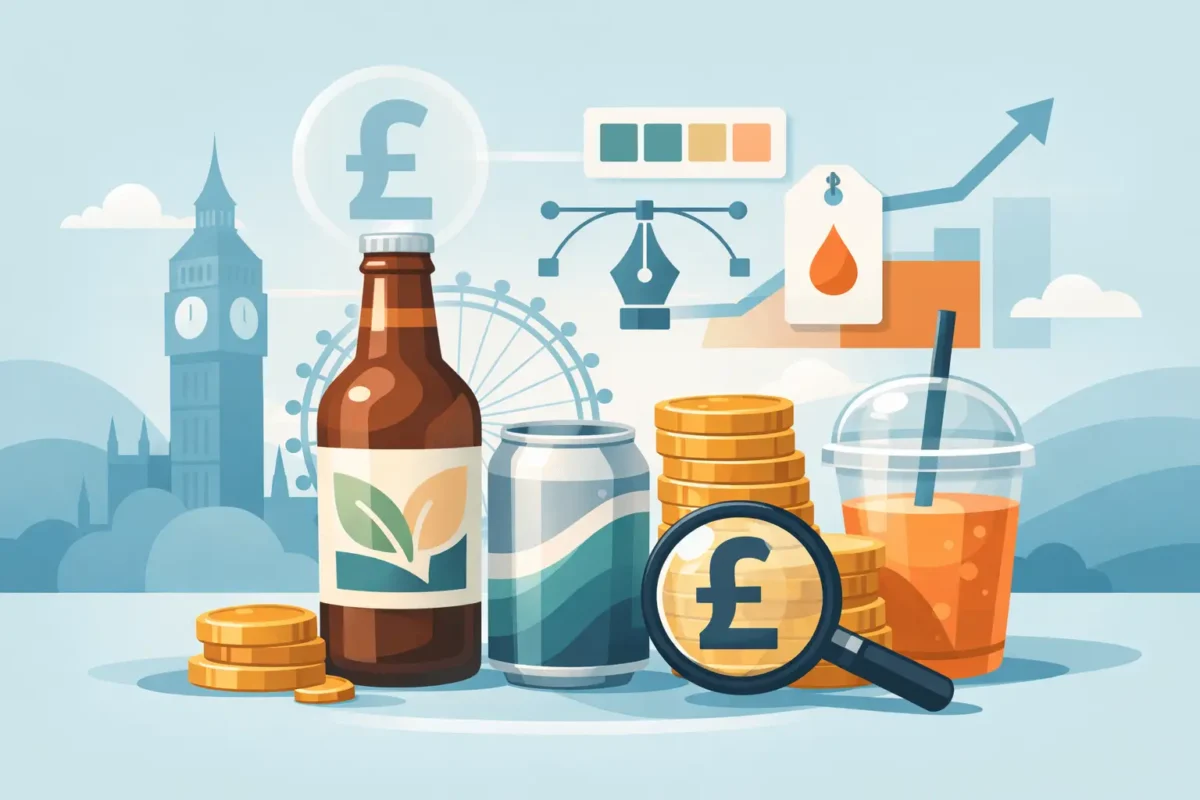
A great drink can still fail before anyone tastes it. If the name is forgettable, the pack is unclear, or the brand gives buyers no reason to believe it deserves shelf space, formulation alone will not save the launch. So, how much does beverage branding cost? For a serious UK drinks startup, branding can range from around £8,000 for focused foundational work to £50,000-plus for a complete, launch-ready brand system.
That is a wide range because “branding” is often used to describe very different jobs. A logo and a can design are not the same as building a commercially credible brand with category positioning, consumer insight, packaging architecture, regulatory-ready artwork and a story that a buyer can understand in 30 seconds.
The right question is not simply what branding costs. It is what level of brand development gives your product the best chance of winning in a brutally competitive category.
How much does beverage branding cost in practice?
For most early-stage beverage founders, a realistic branding budget sits between £15,000 and £35,000. This is typically enough to create a distinctive proposition, visual identity and packaging direction that can be developed properly for launch.
At the lower end, you may receive a naming exercise, logo, colour palette and one pack design. This can work for a founder with a very clear strategy, a straightforward product and a limited launch plan. The risk is that decisions are made too quickly: the positioning may be generic, the packaging may not work across future flavours, or the finished brand may look polished but give retailers no commercial reason to list it.
At the higher end, the work goes much deeper. It includes research into the category and target consumer, positioning, brand platform, verbal identity, packaging architecture, multiple SKU designs, launch assets and production-ready artwork. For functional drinks, this process should also reflect the realities of ingredients, permitted claims, taste expectations and the evidence behind the wellness proposition.
A full product-to-launch programme involving beverage formulation, branding, packaging, manufacturing support and route-to-market preparation can often require £40,000 to £100,000 or more before the first production run. That is not a scare tactic. It is the commercial reality of turning an early idea into a credible FMCG business.
What you are actually paying for
Strategy and positioning
Expect to invest roughly £4,000 to £12,000 for proper brand strategy, depending on the depth of research and the complexity of the category. This is where the hard questions get answered: Who is this drink really for? What job does it do in their life? Why will they choose it over established brands? Is the point of difference meaningful, ownable and easy to communicate?
Skipping strategy is one of the most expensive false economies in beverage. Founders often arrive with a flavour, an ingredient or a personal story, but buyers need a proposition that makes commercial sense. A functional energy drink, for example, cannot rely on “natural” alone. It needs a precise consumer, a credible benefit, an occasion to drink it and a reason to switch.
Naming and verbal identity
Naming can cost from £1,500 to £6,000-plus. A good name must be memorable, suitable for your category, practical to use on pack and capable of growing beyond one product. It should also be screened for obvious trademark conflicts before you become emotionally attached to it.
Your tone of voice, brand story and core messaging may sit within this stage or form part of a wider strategy project. These are not decorative words. They shape how you pitch buyers, explain the benefit on pack and build trust with consumers who have never heard of you.
Visual identity and packaging design
Visual identity and packaging are usually the biggest part of the branding spend. Budget around £6,000 to £20,000 for a professional identity and packaging system, with the final figure shaped by the number of formats, flavours and required creative routes.
A single hero SKU in one bottle format is very different from a range of six flavours across cans, multipacks, shelf-ready trays and e-commerce imagery. Each additional format introduces more technical detail, more artwork and more opportunities for inconsistency.
The best packaging is not simply attractive. It works at shelf distance, communicates the product quickly and holds up when placed next to the brands already winning in the fixture. A premium glass bottle may look exceptional but create margin pressure, transport risk and a higher price point. A can may be more practical for an active occasion but puts you in a visually crowded field. Brand design has to account for those trade-offs.
Artwork, compliance and print preparation
Allow approximately £2,000 to £8,000 for artwork adaptation, legal lines, nutrition panels, barcodes, print specifications and final files, particularly if you have several SKUs. This is the stage that turns a design concept into packaging a printer and manufacturer can actually use.
It is also where many cheap projects unravel. Late changes to ingredients, allergens, nutritional values, claims or mandatory information can force a redesign. If your branding partner is not working closely with your formulation and technical teams, you can end up paying twice for artwork that was never viable.
The costs branding does not include
A brand budget and a launch budget are not the same thing. Branding gets the business ready to present itself properly. It does not cover every cost required to get cases into market.
You may also need to fund formulation development, stability testing, shelf-life work, nutritional analysis, certification, trademark registration, packaging samples, photography, a website, sales materials, trade marketing and initial stock. Manufacturing minimum order quantities can demand a substantial amount of working capital, especially for custom cans, specialist ingredients or printed packaging.
For a lean proof-of-concept launch, founders sometimes begin with a lower-cost digital print or label solution to test demand. That can be sensible, provided the product still looks credible and the unit economics are understood. Moving to fully printed packaging later may improve margin and shelf presence, but it usually involves higher minimum quantities and greater cash exposure.
Why cheap branding can become expensive
There is nothing wrong with controlling spend. There is a problem when the brief is reduced to “make it look premium” without commercial direction.
The most common costly mistakes are not usually bad logos. They are choosing a name that cannot be protected, using claims that cannot be supported, creating packaging that gets lost in category, or launching a range that is too broad before a hero product has proved itself. Every one of those decisions can lead to rework, wasted stock or a difficult conversation with a buyer.
Equally, spending heavily does not guarantee success. A £30,000 brand programme is poor value if it is based on taste preferences inside a meeting room rather than the needs of a defined customer and category. Good agencies challenge assumptions, test the proposition against market realities and make sure creative choices support commercial goals.
How to set a sensible beverage branding budget
Start with your route to market. A direct-to-consumer test, an independent retail launch and a national grocery pitch demand different levels of brand readiness. If you want to approach major buyers, your pack, proposition and evidence need to stand up to close scrutiny from day one.
Then decide what must be right now and what can wait. Your core positioning, master brand, hero SKU and pack architecture are foundational. A large suite of campaign assets, elaborate photography and secondary range extensions can often follow once the product has traction.
Most importantly, keep branding connected to the product itself. A drink positioned around gut health, hydration, focus or natural energy must have a formula, flavour profile and compliant communication that support the promise. Consumers may buy the pack once. They buy the drink again because it delivers.
At Branding Innovations, the strongest projects are built with brand, beverage development and commercial execution in the same conversation. That reduces the gaps that cause expensive surprises later.
Treat your branding budget as an investment in making the right decisions before stock is printed and cash is committed. The right brand will not manufacture demand, but it will give a genuinely good drink the clarity, credibility and presence it needs to earn its place in the market.