
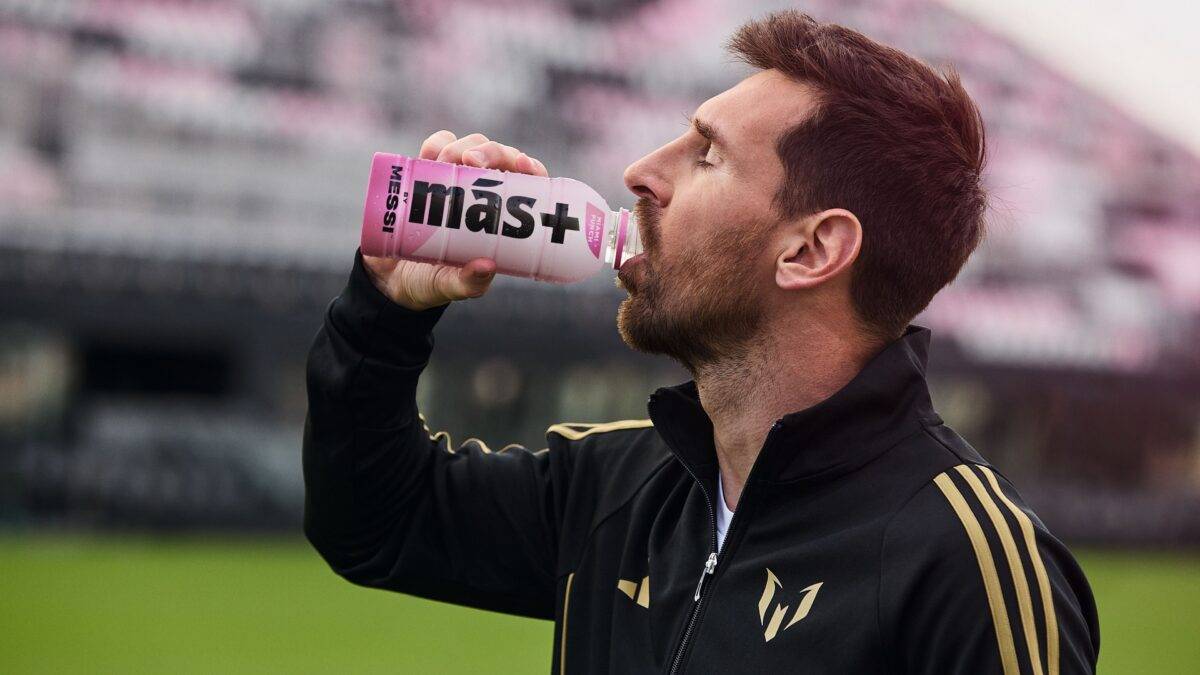
Why Sports Stars Cash In on the Hydration Drink Boom
Sports stars cash in on the hydration drink boom because the numbers justify it completely. The global sports drink market is expected to grow from $34.1 billion in 2025 to $60 billion by 2035 a compound annual growth rate of 5.8%. Athletes, celebrities, and savvy entrepreneurs are not entering this market by accident. They are responding to one of the clearest commercial signals in the entire food and drink industry.
Hydration is no longer just water. It is a category, a lifestyle statement, and a fast-growing multi-billion-pound business. And the brands being built right now, by people who understand both the science and the consumer, are the ones that will dominate the next decade.
At Branding Innovations, we have developed and launched over 200 drink brands worldwide. We have watched this category transform from niche sports nutrition into mainstream consumer culture. This article explains exactly what is driving that transformation and what every brand founder needs to know before entering this space.
The Scale of the Hydration Drink Market in 2025
The data behind this category is extraordinary. The UK sports drinks market alone is estimated at $2.15 billion in 2025, with forecasts indicating growth to $2.76 billion by 2030 a steady CAGR of 5.14%.
But these headline figures only tell part of the story. The more important shift is qualitative what consumers want from a hydration drink has fundamentally changed.
In the UK, a burgeoning fitness culture is reshaping how consumers view sports drinks. The focus has pivoted from mere performance enhancement to hydration as a lifestyle choice. Health conscious individuals ranging from casual gym-goers and wellness enthusiasts to active seniors are seeking hydration solutions that align with broader health objectives like boosting immunity, enhancing energy, and aiding recovery.
This is the market that sports stars are entering. Not the old Lucozade-and-Gatorade category of bright orange bottles on a football pitch. A premium, functional, lifestyle-driven hydration market that reaches far beyond the gym.
What was once “a niche product used primarily by athletes” has now gained widespread recognition among everyday consumers interested in wellbeing and Google searches for “Electrolytes Drink” grew 37% over the past year alone. This is precisely why sports stars cash in on the hydration drink boom they see the market data before most brand founders do.
Why Athletes and Sports Stars Are the Perfect Brand Founders
When a sports star launches a hydration drink, they bring something no marketing budget can manufacture: authentic credibility.
A professional athlete who talks about hydration is not selling a concept. They are sharing a lived, daily necessity. Hydration is not an abstract health claim for them it is the difference between peak performance and a pulled muscle. That authenticity resonates powerfully with consumers.
But the smartest sports stars entering this space go further than authenticity. They bring genuine business discipline.
NBA star Stephen Curry and Michelle Obama co-founded PLEZi Hydration a healthier substitute for typical sports drinks containing no added sugar, 90mg of vitamin C, and 500mg of potassium per bottle. Stephen points to distribution and growth pacing as priorities: “You want to make sure you have your finger on the pulse not growing too fast, but making sure we have that stickiness we need, that sell-through we need.”
This is the approach of a serious brand builder, not a celebrity vanity project. And it reflects a broader pattern we observe across every successful sports star-backed hydration brand: the most successful ones treat the business with the same discipline they apply to their sport.
The Sports Stars Who Are Leading This Movement
Here is a clear picture of high-profile athletes and figures who have entered the hydration drink market and what their involvement signals about the category’s commercial credibility.
| Sports Star | Brand | What Makes It Different |
| Stephen Curry (NBA) | PLEZi Hydration | No added sugar, vitamin C and potassium focus, co-founded with Michelle Obama |
| Cristiano Ronaldo | Whey protein and hydration supplements via CR7 brand | Leverages his global health and fitness platform |
| Tom Brady | TB12 Electrolytes | Clean-label, performance-focused, no artificial anything |
| LeBron James | SpringHill Ventures — multiple functional drink investments | Backs brands with strong clean-label functional positioning |
| Lewis Hamilton | Plant-based wellness investments via Mission 44 brand | Sustainability-led hydration, plant-based credentials |
| Usain Bolt | Bolt 24 — a hydration and energy drink | Caribbean-inspired flavors, natural electrolytes |
Each of these brands shares a common DNA. Clean ingredients. Genuine function. Premium positioning. A founder story built on authentic performance credentials. These are not random celebrity endorsements — they are category-defining brand launches backed by athletes who understand what consumers now demand from a hydration drink.
What Consumers Now Demand From Hydration Drinks
Understanding why sports stars cash in on the hydration drink boom requires understanding what the modern hydration drink consumer actually wants. It is very different from what they wanted a decade ago.
Clean Labels Are Non-Negotiable
The latest shifts in consumer behavior show that UK consumers now prefer low calorie and organic sports drinks a clear movement towards healthy hydration. Low-calorie formulations currently hold 26.3% of UK market share, with a growing focus on clean label, sugar-free, and natural ingredients fostering significant innovation.
Consumers read ingredient lists. They recognize and reject artificial colors, synthetic sweeteners, and preservatives. A hydration drink that still contains aspartame or acesulfame-K is immediately at a disadvantage with health-conscious buyers regardless of the functional claims on the front of pack.
Electrolytes Are the Core Functional Claim
Electrolytes sodium, potassium, calcium, magnesium, and chloride are the foundation of any credible hydration drink. They replace minerals lost through sweat, support fluid absorption at a cellular level, and prevent cramping, fatigue, and cognitive decline linked to dehydration.
The global electrolyte beverages market is expected to surpass $33 billion by 2025, driven by rising health awareness and growing interest in fitness.
The most effective electrolyte formulations do not just include these minerals they include them in the right ratios, in bioavailable forms, at clinically relevant doses. This is where formulation expertise matters enormously.
Everyday Athletes Are the Primary Market
This is a critical strategic insight for any brand entering this space. The primary consumer for hydration drinks in 2025 is not the elite athlete. It is the everyday active adult the person running three times a week, attending gym classes, cycling to work, or simply trying to stay properly hydrated through a busy day.
Exercise tracking app Strava highlighted in its 2024 Year in Sport report that run clubs are “the new nightclubs,” noting a 59% increase in participation globally. Marathon, ultramarathon, and century ride events logged on the app grew by 9%.
This explosion in everyday athletic participation is the engine of hydration drink demand. These consumers do not want a drink designed for professional sports science labs. They want something that tastes great, functions genuinely, and fits their lifestyle.
Beyond Basic Hydration: The Functional Upgrade
The most commercially exciting segment of the hydration market is the move beyond electrolytes into full functional formulation. Consumers increasingly want their hydration drink to do more than replace minerals.
This shift has sparked heightened interest in beverages enriched with vitamins, minerals, adaptogens, and nootropics products that combine hydration with broader wellness benefits in a single, convenient format.
The most successful innovation in this space combines rapid hydration with complementary functional benefits:
| Functional Layer | Ingredients | Consumer Benefit |
| Core hydration | Sodium, potassium, magnesium, calcium | Electrolyte balance, fluid absorption |
| Energy support | B vitamins, natural caffeine, guarana | Sustained energy without crash |
| Recovery | Amino acids (BCAAs), vitamin C, zinc | Muscle repair, immune support |
| Cognitive performance | L-theanine, lion’s mane, Rhodiola | Focus, mental clarity, stress resilience |
| Gut health | Prebiotics, inulin, probiotics | Digestive support, microbiome health |
| Anti-inflammatory | Turmeric, ginger, tart cherry | Reduced inflammation, faster recovery |
Brands that combine two or three of these functional layers built around a clean, great-tasting electrolyte base occupy an extremely compelling and differentiated market position.
For a deeper look at how nootropic ingredients enhance cognitive performance in functional drinks, see our full article on nootropic drinks and brainpower.
The Hydration Drink Formats Winning in the Market
Format strategy is an often-overlooked but commercially critical decision for any hydration drink brand.
| Format | Key Advantage | Best Channel |
| RTD (Ready-to-Drink) Cans | Convenience, premium on-shelf presence | Supermarkets, gyms, convenience |
| RTD Bottles (PET) | PET bottles commanded 73.44% of UK sports drink revenue in 2024 — dominant format | All retail channels |
| Powder Sachets/Sticks | Pouches/sachets projected at fastest CAGR of 7.01% from 2025–2030 | Online, direct-to-consumer, Amazon |
| Concentrated Drops | Premium positioning, travel-friendly | D2C, premium health retailers |
| Tablets/Effervescent | Established format, high familiarity | Pharmacy, sports nutrition, online |
The growing $1.4 billion hydration powder market presents a significant incremental growth opportunity a format expanding rapidly as brands launch electrolyte-based powder sticks supporting hydration with zero sugar and essential B vitamins.
Powder and sachet formats are particularly attractive for new brand entrants. They carry lower minimum order quantities than RTD formats. They are easier to ship and store. And they sell exceptionally well through Amazon and direct-to-consumer channels where the hydration category is experiencing its fastest growth.
Online retail in the UK sports drink market is growing at 9.11% CAGR over the forecast period the fastest-growing distribution channel in the category.
The Key Ingredients Behind a Winning Hydration Drink
Getting the formulation right is everything. Here is our practical guide to the essential and emerging ingredients in the hydration drink category.
Essential Electrolytes
Every serious hydration drink must start here. The four core electrolytes sodium, potassium, magnesium, and calcium work together to regulate fluid balance, nerve function, and muscle contraction.
- Sodium is the most important electrolyte for hydration. It drives fluid absorption in the intestine. Drinks with too little sodium fail to rehydrate effectively. Drinks with too much taste unpleasant and carry a negative health perception.
- Potassium works alongside sodium to regulate cellular fluid balance and prevent cramping. It is particularly important in endurance sports formulations.
- Magnesium supports over 300 enzymatic processes in the body. It is involved in energy production, protein synthesis, and muscle function. It is also consistently under-consumed in Western diets making it a compelling addition to any functional hydration brand.
- Calcium is essential for muscle contraction and nerve transmission. Often overlooked in sports drinks, it completes the electrolyte picture for a truly comprehensive hydration formula.
Natural Hydration Boosters
Beyond pure electrolytes, several natural ingredients enhance hydration efficiency significantly:
- Coconut water powder — a natural source of potassium and electrolytes, carries strong clean-label credentials
- Himalayan pink salt — a natural sodium source with a premium, mineral-rich perception
- Watermelon juice — natural electrolytes plus citrulline, which supports blood flow and recovery
- Aloe vera — supports gut lining health and enhances fluid absorption
- Hyaluronic acid — increasingly used for cellular hydration, particularly in premium wellness formats
Natural Sweeteners and Flavor
A hydration drink must taste genuinely good. This is not optional. A product that consumers feel they have to tolerate rather than enjoy will not generate repeat purchases.
The clean-label approach to sweetening uses stevia, monk fruit, or erythritol or a blend of all three to achieve a pleasant sweetness profile without sugar or artificial compounds. For a detailed guide to natural sweetener formulation, see our article on natural flavors without artificial sweeteners.
Flavor should reinforce function. A citrus profile signals energy and refreshment. A berry profile signals antioxidants and recovery. A tropical profile signals wellness and escapism. Every flavor choice communicates something about the brand make it intentional.
Where Hydration Drinks Are Selling: The Retail Landscape
Understanding where to sell your hydration drink is as important as what goes into it. Our launch service gives us direct access to over 6,500 UK buyers. Here is what we observe about channel performance in this category right now.
1-Supermarkets lead on volume. Supermarkets and hypermarkets accounted for 72.08% of UK sports drink sales in 2024. Securing a supermarket listing requires strong branding, clear functional differentiation, and a compelling commercial story. It also requires knowing the right buyer which is where experience and direct relationships make the difference.
2-Gyms and fitness centers are the natural home of hydration drinks. A listing with a major gym chain provides both sales volume and powerful brand credibility. Consumers who discover your product in a gym setting trust it because it has been selected by a fitness environment they already trust.
3-Health and wellness retailers — Holland & Barrett, Planet Organic, independent health stores are increasingly stocking premium hydration brands with clean-label, functional credentials. These channels carry consumers with high health literacy and high spending power.
4-Online and Amazon are where the category is growing fastest. A well-optimized Amazon listing with strong reviews can generate significant revenue without the complexity of traditional retail relationships. Direct-to-consumer also builds deep consumer relationships and valuable first-party data.
5-Sports clubs, running events, and endurance races offer direct access to the core target consumer at the exact moment they need a hydration product. Sampling at these events builds brand trial and loyalty simultaneously.
Building Your Hydration Drink Brand: The Development Journey
If you are considering entering this market inspired by the same commercial logic that has drawn in sports stars cashing in on the hydration drink boom here is what the proper development journey looks like.
Stage 1 — Define Your Positioning
Who is your consumer? A professional athlete needs different electrolyte ratios than a casual gym-goer. A premium wellness brand needs different ingredients and packaging than a mass-market sports drink. Define your audience with precision before formulating a single ingredient.
Stage 2 — Develop the Formula
This is where most brands make their costliest mistakes. They choose the cheapest electrolyte blend, under dose key functional ingredients, use artificial sweeteners to cut costs, and produce a drink that functions but tastes mediocre.
Our recipe development process takes a fundamentally different approach. Our lead recipe developer has over 40 years of experience. She understands ingredient interactions, stability across different formats, pH requirements, and how flavors perform differently in cans versus PET versus glass. Getting the formula right takes multiple iterations. It cannot be rushed.
Stage 3 — Build the Brand
A hydration drink brand must look premium. Consumers making a conscious, health-driven purchase decision are evaluating your brand values, not just your ingredient list. Everything naming, color, typography, label design, brand copy must reflect the identity of your target consumer.
Our brand development process conducts thorough competitive market research. It defines your positioning precisely. It creates a visual identity and brand story that wins on shelf, online, and in buyer meetings.
Stage 4 — Navigate Regulation
Health claims on hydration drinks are regulated in the UK under the Nutrition and Health Claims Register. Claims about electrolyte replenishment, hydration, and specific functional benefits must meet defined standards. Getting compliance right from the beginning protects your investment.
Stage 5 — Manufacture and Launch
Our production service connects brands with vetted co-packers experienced in sports and hydration drink formats including cans, PET, glass, and powder sachets. We manage the supply chain process from ingredient sourcing to final product delivery.
The launch phase then activates our direct buyer relationships across supermarkets, gyms, health retailers, hospitality, and online giving your brand immediate market access built on nearly two decades of established relationships.
Expert Insight: What Makes a Hydration Drink Brand Succeed
Our nearly two decades of experience confirm exactly why sports stars cash in on the hydration drink boom credibility, timing, and genuine product quality are an unbeatable combination. After nearly two decades and over 200 brand launches, here is what we know about hydration drink brand success.
The brands that win are built around a specific consumer truth. Not a generic claim. A specific, provable, relatable insight. “Your 3pm energy crash is a hydration problem, not a caffeine problem.” “Most sports drinks are 80% sugar and 20% marketing.” “You lose 2 litres of fluid in a single spin class.” These are the kinds of consumer truths that anchor a brand story that sells.
The brands that fail are built around generic positioning. “Hydrate better.” “Performance in every sip.” “The drink for champions.” These phrases say nothing specific. They differentiate nothing. They give a buyer or consumer no reason to choose you over any other brand on the shelf.
Specificity sells. In recipe development, in branding, in buyer conversations, and in consumer communication the more specific and honest your brand is about who it is for and what it does, the stronger its commercial performance.
The Market Opportunity: Why Now Is the Right Time
The convergence of several trends makes right now an exceptional moment to enter the hydration drink market.
Several new functional beverage start-ups focused on hydration have emerged, while big players in the sports and energy drinks space have expanded into performance hydration with new electrolyte powders and RTD formats signaling that the entire industry recognizes hydration as the next major growth frontier.
Search interest for “hydration drinks trends” surged to a normalized score of 100 in March 2025 the highest recorded while “energy drinks trends” peaked at just 22 in May 2025. This reflects a decisive consumer shift toward hydration-focused, health-conscious choices.
The window for independent brands to establish a position in this market before it becomes dominated by reformulated versions of legacy energy drink giants is real and open right now. The brands entering with genuine formulation quality, premium branding, and strategic market access will be the category leaders of 2030.
It is no surprise that sports stars cash in on the hydration drink boom at exactly this moment when consumer demand, market data, and category growth all point in the same direction.
FAQs: Sports Stars and the Hydration Drink Boom
Q: Why are sports stars launching hydration drink brands?
Sports stars bring authentic credibility to a category built on performance and health. They also recognize a clear commercial opportunity the global hydration drink market is growing toward $60 billion by 2035, making it one of the most attractive beverage categories for brand investment today.
Q: What makes a hydration drink different from a regular sports drink?
Modern hydration drinks go beyond basic sugar-and-electrolyte formulas. They combine clean-label electrolytes with functional ingredients adaptogens, nootropics, vitamins, or probiotics to deliver comprehensive wellness benefits rather than just short-term performance support.
Q: What electrolytes should a hydration drink contain?
The four core electrolytes are sodium, potassium, magnesium, and calcium. Sodium drives fluid absorption. Potassium prevents cramping. Magnesium supports energy production. Calcium supports muscle and nerve function. All four should be present in a properly formulated hydration drink.
Q: Is the UK hydration drink market too competitive for a new brand?
Despite strong growth, the premium clean-label hydration segment remains under-served. Most existing products either under-dose functional ingredients or rely on outdated formulations. A well-developed, properly branded new entrant has a genuine opportunity to capture meaningful market share.
Q: How do I start developing a hydration drink brand in the UK?
Begin with a clear consumer positioning who the drink is for and what specific benefit it delivers. Then invest in proper recipe development, regulatory compliance, and premium branding before approaching any buyer. Working with an experienced drink development partner significantly accelerates this process and reduces costly mistakes.
Q: Do I need a celebrity or sports star to launch a successful hydration drink?
No. Celebrity involvement accelerates awareness but does not guarantee success. Many excellent independent hydration brands have built loyal consumer bases through great formulation, strong branding, and smart channel strategy. Authenticity and product quality matter far more than a famous face.
Final Thoughts: The Boom Is Real — And It Is Not Over
Sports stars cash in on the hydration drink boom because the commercial logic is undeniable. The market is large, growing, and still wide open for brands with the right formula, the right brand identity, and the right launch strategy.
The consumer has changed. They want clean ingredients, genuine function, and a drink that reflects their values and supports their active life and they’re willing to pay a premium for it. And they are actively looking for brands that deliver it.
The brands being built right now with proper recipe development, premium branding, and strategic market access will be the hydration category leaders of the next decade. The question is whether your brand will be one of them.
If you have a hydration drink concept and want honest, expert guidance on developing and launching it, speak to our team today. We offer a free initial consultation and bring nearly two decades of UK drinks market experience to every conversation.
Read our Book for Guidance
Branding Innovations is the UK’s leading specialist in drink development, branding, and product launch. We have developed and launched over 200 brands worldwide. Our recipe development team has over 40 years of experience in functional beverage formulation.
For further reading, explore our related articles on functional mocktails and adult soft drinks, nootropic drinks, and natural flavors without artificial sweeteners.