
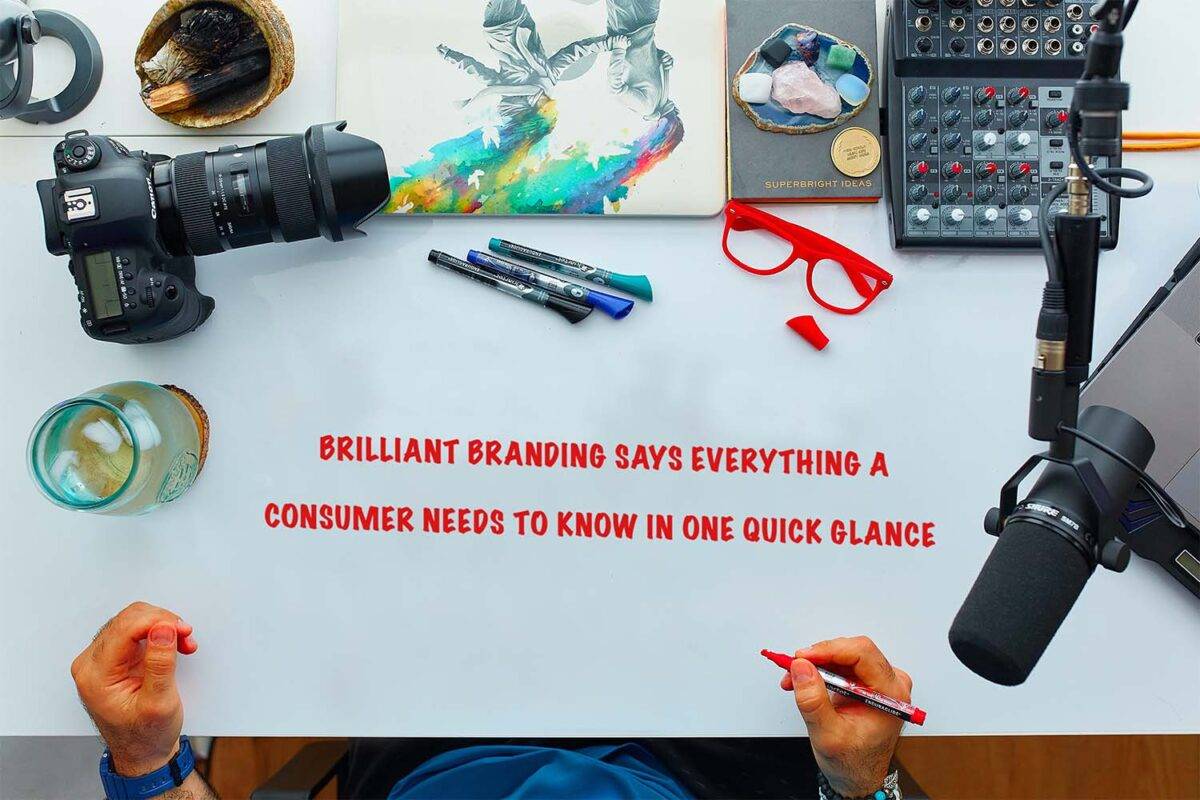
Why Your Brand Is As Important As The Product Itself
Your brand is as important as the product itself. This is not a marketing platitude. It is one of the most commercially consequential truths in the UK drinks industry and one that too many founders discover too late.
Your branding is as important as the product itself. But do not confuse design with branding. Branding is the message you want to give your target consumer and that message should be “BUY ME.”
A drink that tastes extraordinary but sits in forgettable packaging will not sell. A drink with brilliant branding and a mediocre recipe will not generate repeat purchases. You need both. But the mistake most founders make is investing heavily in recipe development then underinvesting in the brand that sells it.
In 2026, the stakes around branding have never been higher. With traditional TV and digital advertising routes curtailed by HFSS restrictions, FMCG brands are moving towards in-store theatre, pack-led storytelling and brand-building through owned channels. Rather than relying on broadcast media, the entire industry is shifting its focus to being visible at the moment of choice.
That moment of choice is where your brand lives. At six feet on a retail shelf. In a three-second window. Against dozens of competing products all fighting for the same consumer attention.
At Branding Innovations, we have built and launched over 200 drink brands. We know what wins at shelf and what gets ignored. This article explains exactly what branding means in the drinks industry and how to build a brand that genuinely sells.
Design Is Not Branding. Know the Difference.
This distinction is fundamental. It is also one of the most misunderstood concepts in the entire drinks industry.
1-Design is the visual execution logo, color palette, typography, label layout. It is important. But it is the output of a branding process, not the process itself.
2-Branding is the strategic foundation. It is the answer to every question a consumer asks when they encounter your product for the first time:
- What is this drink?
- Who is it for?
- What does it do for me?
- Why is it better than what I already buy?
- Is it worth the price?
- Can I trust it?
When you first start developing your product, you need to ask yourself the same questions your target audience will ask. What is unique about this product? Why is it better than the competition? Should I risk spending money on this untried brand? Does it offer value for money? Your branding needs to answer all of these questions.
If your branding cannot answer these questions instantly, clearly, at shelf your product will not sell. Not because the recipe is wrong. Because the brand is silent.
A designer produces beautiful work. A brand strategist produces work that sells. Your drink brand needs both in the right sequence. Strategy first. Design second.
The Six-Foot Rule: What Branding Must Achieve in Retail
Walk into any UK supermarket, health food store, or premium independent retailer. Stand back from the shelf. At six feet the distance from which most consumers first encounter a new product what do you actually read?
You read color, shape, and the largest typographic elements, absorb a mood, and form an instant impression. And you make a preliminary decision: interesting or irrelevant.
This is where most new drink brands lose the battle before it has even begun.
When a consumer walks down a supermarket aisle, your label design has approximately three seconds to make an impact. Packaging influences 70% of purchase decisions at the shelf defining trust, usability, and brand recall in a crowded market.
Those three seconds are your entire marketing budget working in one concentrated moment. Every pound you have spent on recipe development, regulatory compliance, co-packer relationships, and retail negotiations comes down to whether your label stops a consumer in those three seconds.
Consumers usually scan shelves or screens in seconds, not minutes. Packaging that is visually clear and well-structured immediately grabs attention and enters the consideration set. If it fails at this stage, the product is often ignored.
The six-foot rule determines every decision in our brand development process. Does the name read at six feet, the benefit land clearly, and the color communicate the right emotion? Every element must earn its place or be removed.
The Most Expensive Word in Food and Drink: Education
The most expensive word in the food and drink category is “education.” If you need to take time to educate the consumer away from the packaging, you will either spend millions or fail or both.
This is a truth that experienced drink brand founders understand deeply and first-time founders consistently underestimate.
When consumers encounter your product on shelf, they do not read the back label. They don’t visit your website or follow your social media to understand what you sell they make a purchase decision in seconds based entirely on your front-of-pack.
If your product requires explanation before a consumer understands what it is and why they should buy it, your branding has failed at its most basic function.
This is why the most successful functional drink brands make their benefit instantly legible. “Calm energy.” “Brain fuel.” “Sleep better.” “Gut health in a can.” These are not headlines they are functional declarations that land in under a second and require zero explanation.
If your drink requires a paragraph of copy to communicate its value, rewrite the brand. Not the paragraph.
Your Brand Is As Important As The Product Itself: Proving It With Data
Nielsen data showed that 64% of customers purchasing a new product are prompted by the packaging of the product. The value of attractive packaging in stimulating consumer purchasing behaviours far exceeds the value of advertising.
In a 2018 survey, product packaging design influenced 72% of consumers’ purchase decisions. This is because packaging is the first thing buyers see while shopping or browsing. If a brand’s packaging looks attractive and compelling, buyers will likely form a positive perception of the brand.
These numbers make a simple but powerful argument. The product gets consumers to come back. The brand gets them to buy the first time. Both are essential. Neither works without the other.
Consumers increasingly seek authenticity, regional identity and narrative depth. They are not only buying a product they are buying into a story and a cultural proposition. Premiumization is therefore closely linked to storytelling and visual impact.
Your brand is as important as the product itself not just in the first purchase moment, but in the sustained relationship between brand and consumer. A brand with genuine personality, authentic story, and visual distinctiveness builds loyalty. A product without a brand identity is a commodity competing only on price.
The Five Elements of a Winning Drink Brand in 2026
What does a great drink brand actually look like in practice? Here is the framework we apply across every brand we develop at Branding Innovations.
1. A Name That Does Commercial Work
Your brand name is not just a label. It is a piece of daily marketing. Every time a consumer says your name, reads it on a shelf, or types it into a search engine, your name either reinforces or undermines your positioning.
A great drinks brand name achieves several things simultaneously. It is distinctive no one else has it, memorable people recall it easily, and meaningful communicating something about the product’s function, flavor, personality, or provenance. And it is available for trademark registration.
Trade buyers only want products that will sell quickly and easily. They do not want old stock taking up room on their shelves. A product has to sell easily from first encounter and the name is the first encounter.
We research trademark availability through the UK Intellectual Property Office as a standard step in our naming process. A brilliant name that cannot be registered is not a brilliant name it is a legal risk.
2. A Visual Identity That Wins on Shelf and Online
Your visual identity must perform across two completely different environments simultaneously the physical retail shelf and the digital landscape.
Omnichannel packaging must win both in-planogram visibility at retail and 200-pixel mobile thumbnails online. High-contrast packaging and oversized typography consistently outperform muted palettes in digital food discovery environments.
What looks extraordinary in a branding presentation may disappear on a crowded shelf. What dominates at shelf may be illegible as a small social media thumbnail. The best drink brand identities are designed to perform brilliantly in both environments and tested against both before finalization.
Color is the most powerful tool in this arsenal. Color communicates emotion, category membership, and brand personality faster than any other visual element. Owning a distinctive color within your category as Fever-Tree owns their green, as TRIP owns their muted beige, as Tenzing owns their teal creates instant recall that accumulates with every consumer exposure.
3. Packaging That Communicates the Right Hierarchy
Front-of-pack information hierarchy is one of the most technically demanding aspects of drink brand design. You have limited space. You have multiple messages to communicate. Every message competes for consumer attention. The hierarchy must be ruthlessly prioritized:
Level 1 — Instantly readable at six feet. Brand name. Core benefit or positioning statement. Key flavor indicator.
Level 2 — Readable on pick-up. Supporting functional claims. Key ingredients. Certifications.
Level 3 — Readable on detailed examination. Full ingredient list. Nutritional information. Brand story. QR code for extended content.
Most new drink brands make the mistake of promoting Level 3 information to Level 1. They lead with ingredient lists, scientific claims, and detailed nutritional breakdowns that belong on the back of the pack. The consumer never gets there because the front-of-pack failed to give them a reason to pick the product up.
Consumers want transparency. No confusing jargon, no visual overload. Just clarity. Clean layout, clear claims, and educational storytelling in the smallest possible space this is the standard consumers and retailers expect in 2026.
4. A Brand Story That Creates Emotional Connection
A well-crafted brand identity can leave a lasting impression particularly important in the drinks industry, where brand loyalty leads to repeat purchases and long-term customer relationships. Today’s drinks consumers want more than just a product they want a story.
Brand story operates on two levels in the drinks market. There is the macro story the “why” of the brand, the values it stands for, the consumer it is for, the belief it holds about how people should drink. And there is the micro story the provenance of a specific ingredient, the founder’s personal journey, the single defining moment that created the product.
Both matter. The macro story creates brand identity. The micro story creates brand authenticity.
Innocent Drinks captured consumers’ hearts with its charming origin story it started when its founders sold smoothies at a music festival and asked customers to vote on whether they should quit their jobs to make smoothies full-time. Starbucks built an entire global business around the idea of a “third place” a comfortable space between home and work. Both brands demonstrate that the story is as commercially powerful as the product it surrounds.
Your drink brand’s story does not need to be dramatic. It needs to be real. Specific. Human. And consistently told on pack, online, in press, and in buyer meetings.
5. Consistency Across Every Touchpoint
A brand that looks different on shelf versus online versus in press versus at sampling events is not a brand. It is a collection of unconnected visual assets.
Consistency is what builds brand recognition over time. Every consumer exposure reinforces the same visual and emotional memory. Over thousands of exposures across retail, social, events, and press that memory becomes the instinctive reach for your product at the point of purchase.
A-brands build true distinctiveness by articulating their stories and values consistently over time. This gives them the ability to build cultural depth, embed themselves in consumers’ emotional worlds, and create the kind of memory structures that help a brand endure beyond any single touchpoint. In a market where functional gaps are narrowing, distinctiveness has never been more crucial.
The Point of Difference Problem: Being Unique on Shelf
In a category with hundreds of competing products, every brand claims to be different. Most are not.
In order to have any chance of success in today’s market, you must have a point of difference. This needs to be very clear in your branding and messaging on the packaging. Just being vegan is not enough there are masses of vegan brands now, and most drinks are already vegan. Sit down and think about what makes your brand different, then make a list and pick the most important points. These are the ones to highlight on the packaging.
A genuine Point of Difference in a drink brand is not a single feature. It is the intersection of several elements that collectively make the product unlike anything else on the shelf:
| POD Element | Weak Example | Strong Example |
| Ingredient | “Contains vitamin C” | “The only UK drink using lion’s mane and lemon balm together” |
| Benefit | “Good for you” | “Calm focus without caffeine crash” |
| Target consumer | “For health-conscious people” | “For professionals who need brain performance after 3pm” |
| Provenance | “Natural ingredients” | “Botanicals sourced from a single Herefordshire farm” |
| Format | “Comes in a can” | “The first UK functional mocktail in a premium 200ml can” |
| Brand personality | “Premium and approachable” | “The drink that takes wellness seriously without taking itself seriously” |
The strongest PODs combine two or three of these elements into a single, specific, instantly communicable brand position. That position then drives every branding decision name, design, color, copy, and channel strategy.
Branding Is What Wins the Buyer Meeting
Your brand is as important as the product itself not just for consumer sales but for the buyer conversations that determine retail listings.
Buyers see hundreds of new product submissions every month. They make listing decisions rapidly. A product that arrives in a plain cardboard box with a generic pitch deck will not get a listing regardless of how good the recipe is.
A brand that arrives in beautifully branded presentation packaging, with a compelling pitch that communicates the consumer opportunity in two minutes, with clear photography and a tight commercial story, gives the buyer something to believe in.
Trade buyers only want products that will sell. A product has to sell easily and quickly and the brand is the primary tool that enables that speed of sale.
Our launch service at Branding Innovations provides direct access to over 6,500 UK buyers. In every buyer meeting we facilitate, the brand presentation is as important as the product itself. We have seen great drinks fail to get listed because of weak branding. We have seen good drinks secure listings ahead of better competitors because their brand told a more compelling commercial story.
The buyer is not just evaluating whether your drink tastes good. They are evaluating whether their shoppers will see it, understand it, and buy it repeatedly, at the velocity needed to justify the shelf space.
Your brand is the answer to that question.
Branding in the Age of HFSS Restrictions
The UK’s HFSS advertising restrictions active from January 2026 have created a fundamental shift in how drink brands must build awareness and drive sales. Traditional paid advertising channels are restricted for HFSS-classified products. This means the packaging itself must work harder than ever as a marketing medium.
With traditional TV and digital advertising routes curtailed, brands are moving towards in-store theatre, pack-led storytelling and brand-building through owned channels. The story in 2026 is not about being cheaper. Functional ingredients, sustainability credentials and experiential positioning will increasingly be used to support price points and drive purchase decisions at shelf.
For new drink brands entering the market in 2026, this regulatory shift is actually an opportunity. Brands that have always relied on their packaging to do the heavy lifting because they could not afford mass advertising anyway are now operating in a market where the largest established brands are being forced to play on the same terms.
The packaging becomes the primary communication channel. The brand story becomes the primary marketing asset. And the brands with the strongest visual identity, clearest messaging, and most distinctive shelf presence will win regardless of the size of their marketing budget.
Common Branding Mistakes That Kill Drink Brands
After nearly two decades and over 200 brand launches, here are the branding mistakes we see most consistently.
Mistaking Minimalism for Clarity
Minimalism has become a dominant trend in drinks branding. When executed brilliantly, it communicates premium positioning, clean ingredients, and modern sophistication instantly. When executed poorly, it communicates nothing.
Minimalism has become a trend with many designs jumping on the bandwagon. However, be careful not to make it too minimal. Designs where a designer has tried to be cool but forgotten about selling the brand lead to the consumer ignoring the product completely and reaching for the safer, established brand they already know.
Minimalism is not about using less. It is about using only what matters and making everything that remains work as hard as possible. A minimal design with weak hierarchy, unclear messaging, and no distinctive color is not premium. It is invisible.
Branding for the Founder, Not the Consumer
The previous design agency had simply splashed the logo across the entire bottle with no thought to education, messaging, a relevant name, or the drink’s point of difference that would encourage the target audience to choose it. In other words, the branding was all about the client, not the consumer.
This is one of the most common and costly branding mistakes: founders love their brand, understand every element, and assume consumers will feel the same.
They do not. Consumers are indifferent to your brand until your brand gives them a reason not to be. Your branding must speak to them their lives, their values, their needs not to you.
Ignoring the Digital Context
In 2026, your brand lives on a shelf and on a screen simultaneously. A label that looks extraordinary in print may be illegible at the size it appears in an Amazon listing, a social media image, or a delivery app thumbnail.
High-contrast packaging and oversized typography consistently outperform muted palettes in digital food discovery environments. Omnichannel brands must win both in-planogram visibility and 200-pixel mobile thumbnails.
Test your brand at every size and in every context before finalising it. The label that looks perfect in the designer’s presentation may fail the moment it appears on a mobile screen.
Using an Ingredient Name as a Brand Name
A brand named after its hero ingredient “AshwaShot,” “Lion’s Blend,” “ElectroWater” has no brand equity to build. It describes the product. It does not create the emotional connection, lifestyle aspiration, or consumer identity that drives loyalty.
The most powerful drink brand names are evocative, distinctive, and slightly unexpected. They create curiosity. They invite investigation. And they own a piece of mental real estate that no competitor can copy.
Think TRIP, Innocent, and Tenzing. None of these names describe the product. All of them perfectly capture the brand’s personality and positioning.
Using Familiar Ingredients to Bridge the Unknown
One of the most commercially intelligent branding and formulation strategies for functional and innovative drink brands is using familiar ingredients alongside novel ones.
We all tend to pigeonhole everything in our lives. When we see a new brand, we put it in its place. So if you are attempting to break new ground with an idea or base ingredient, you need to add something to the mix that the consumer already knows. For example, Branding Innovations developed a drink based on the stinging nettle called Emunity. To help consumers reach out and try this, they added ingredients they recognize gooseberry, cucumber, and wild strawberry. The key is to make sure the messaging is easy to understand and include elements that consumers can connect with instantly.
This principle applies to branding as directly as it applies to recipe development. If your drink uses an unusual ingredient, anchor the brand communication in something familiar. A nootropic drink with lion’s mane leads with “brain fuel” not “fungal extract.” A hydration drink with ashwagandha leads with “calm energy” not the Sanskrit name of the botanical.
Give consumers a door they already know how to open. Then lead them inside to something genuinely new.
The Brand Development Process at Branding Innovations
Our brand development process is built on the same principle that runs through everything we do: commercial rigour before creative execution.
1-Market research first. We analyze the global competitive landscape in your target category, identify what exists, what’s overcrowded, and where genuine gaps remain, and establish the positioning your brand can own.
2-Consumer definition. We define your target consumer with precision demographics, lifestyle, values, shopping behavior, and the specific purchase context in which they will encounter your product.
3-Positioning and messaging architecture. We build the strategic foundation before any design begins your brand’s core message, hierarchy of claims, tone of voice, and the single sentence that captures your entire brand proposition.
4-Naming. We develop distinctive, ownable name options researched against trademark availability and tested against your positioning criteria. We do not present names we cannot protect.
5-Visual identity. Only after all of the above is agreed do we move to visual design. This sequence is non-negotiable. Design that precedes strategy produces beautiful work that does not sell.
6-Packaging design. We develop your full packaging design front and back of pack tested at multiple scales and in multiple retail and digital contexts.
7-Marketing materials. We extend your brand identity across the materials you need for buyer presentations, trade shows, sampling events, social media, and website.
What the Best Drink Brands of 2026 Have in Common
Looking across the UK drinks market in 2026, the brands building genuine consumer loyalty and commercial momentum share a specific set of brand characteristics.
They lead with a clear, specific benefit. Not “wellness.” Not “natural.” A specific, felt outcome that consumers can describe in their own words after one encounter with the brand.
They own a distinctive visual territory. A color, a shape, a visual motif that is instantly theirs that consumers recognize at distance before they read a single word.
Consumers seek authenticity, regional identity and narrative depth. They are not only buying a product they are buying into a story and a cultural proposition.
They communicate with a consistent, confident voice. Whether on pack, on social media, in press, or at a sampling event they sound like one brand, always.
And they understand that your brand is as important as the product itself not as a principle to pay lip service to, but as a commercial reality that shapes every investment decision they make.
FAQs: Your Brand Is As Important As The Product Itself
Q: What is the difference between branding and design for a drink brand?
Design is the visual execution logo, colors, typography, and label layout. Branding is the strategic foundation the message, positioning, and consumer communication that design expresses. Great design without strong branding produces beautiful packaging that does not sell. Great branding drives the design brief and ensures every visual element serves a commercial purpose.
Q: How much should a new drink brand invest in branding?
A professional brand development process for a new UK drink brand typically costs £8,000–£25,000 depending on scope. This is frequently the most under-funded element of a new drink brand launch and the most commercially consequential. A weak brand on a great product consistently underperforms a strong brand on an equivalent product. Invest in branding proportionally to its commercial impact.
Q: Why is packaging more important than advertising for a new drink brand?
Most new drink brands cannot afford mass advertising. Their packaging is their primary marketing asset working at the exact moment of purchase, in the exact environment where buying decisions are made. In 2026, HFSS advertising restrictions have reinforced this dynamic even further. The packaging must communicate the brand’s entire value proposition clearly, compellingly, and instantly without any supporting advertising.
Q: What makes a drink brand name commercially strong?
A strong drink brand name is distinctive, memorable, trademarkable, and communicates something meaningful about the product’s personality or positioning. It does not need to describe the product literally the most powerful drink brand names create emotional resonance rather than literal description. Always verify trademark availability before investing in any name.
Q: How do I ensure my drink brand works both on shelf and online?
Design and test your brand at every scale from full-size label to 200-pixel digital thumbnail. High-contrast color palettes, oversized typography, and bold visual hierarchy perform consistently across both environments. Muted, overly minimal designs that look sophisticated in print frequently disappear in the digital discovery environment where many consumers first encounter a brand.
Q: What is the single most common branding mistake new drink brand founders make?
The most common mistake is designing the brand to express the founder’s personality or passion rather than to communicate to the target consumer. Branding must always speak to the consumer addressing their questions, serving their values, and reflecting their identity not the founder’s. A brand that is loved by its creator but ignored by its consumer is a commercial failure regardless of how beautiful it looks.
Final Thoughts: Build the Brand As Seriously As the Product
Your brand is as important as the product itself. Not slightly less important. Not a secondary consideration once the recipe is finalized. Equally important at every stage of development, from initial concept to retail shelf.
The drink inside the bottle earns the repeat purchase. The brand on the outside earns the first one. And in a market where only one in ten new drink brands survives beyond two years, that first purchase is the most important commercial event your brand will ever experience.
The story in 2026 is not about being cheaper. Brands that succeed will be those that stay focused on real human behavior and design their packaging, pricing, and communications accordingly.
Build your brand with the same rigour, investment, and expertise that you bring to your recipe. Research your market before you design. Define your consumer before you choose a color. Build your messaging architecture before you brief a designer. And test your final brand against the six-foot rule, the three-second test, and the digital thumbnail before you commit to production.
The brands that get this right are the ones that build something consumers remember, return to, and recommend. The ones that get it wrong produce beautifully formulated drinks in packaging that nobody picks up.
If you want to build a drink brand that performs at shelf, online, and in buyer meetings speak to our team today. We offer a free initial consultation and bring nearly two decades of UK drinks brand development expertise to every conversation.
Read our Book for Guidance
Branding Innovations is the UK’s leading specialist in drink development, branding, and product launch. Our brand development team has built over 200 drink brand identities across two decades.
For further reading, explore our related articles on recipe development, how to prepare your drinks brand for success in 2026, innovative flavor trends, and beverage brand marketing campaigns.